Separate the system description from equipment ratings
A record stating that a building once had a nominal 120/240 V system describes that system, not automatically the stored switchboard’s equipment voltage. Likewise, a 600 A reference might concern an assembly or another component; it is not proof of continuous-current rating. Treat each value as unconfirmed unless a legible equipment record supports it. Do not fill a missing nameplate field from an old building description, nearby equipment, or an assumption about what the switchboard served. This distinction matters when requesting a purchase assessment and prevents unsupported claims about voltage class or suitability.
Keep each rating in its own category
For a useful review, preserve the exact wording and context of records for nominal system voltage, equipment nameplate voltage, assembly continuous current, breaker frame, breaker trip, and interrupting rating. These are different data points, not interchangeable ways to say “600 amp” or “120/240 volt.” One value cannot establish another, and none alone demonstrates compatibility with a particular installation. If a record does not identify which component or rating it describes, mark that relationship unknown. A partial exterior nameplate is useful evidence, but gaps remain gaps until supported by existing documentation.
Send what already exists—without testing
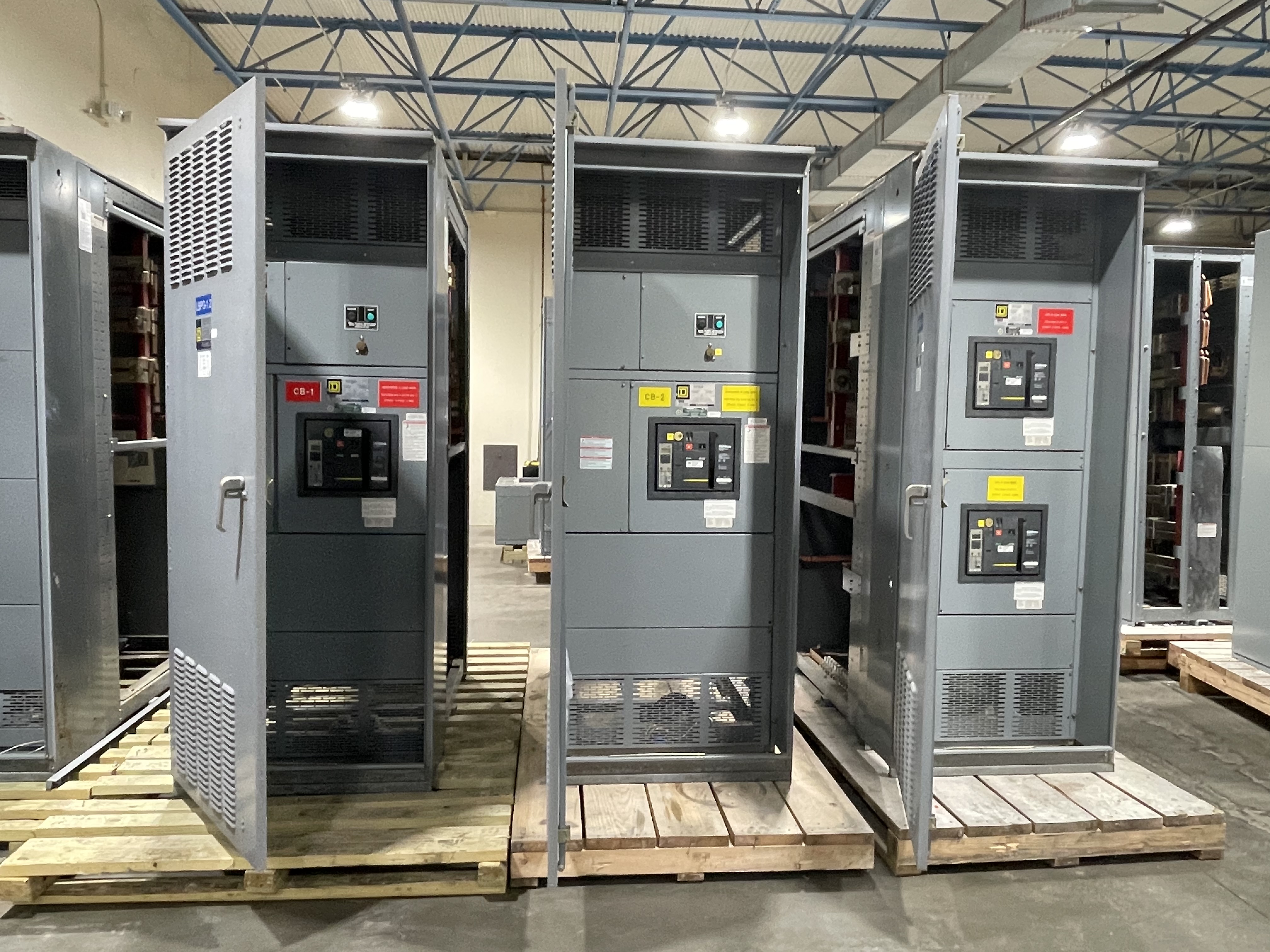
Useful material may include existing asset lists, prior purchase records, maintenance documents, drawings, and photographs of safely accessible exterior surfaces or exterior labels. Images should be taken only from a position authorized by the site and considered safe; do not open a cabinet or photograph its interior. No seller testing, measurements, or preparation are needed to request an assessment. Do not approach, touch, open, operate, test, disconnect, remove, or move equipment that is energized or may be energized. Electrical tasks belong only to qualified, authorized personnel working within site rules.
Describe condition and access without making assumptions
Share what is known about storage, visible exterior condition, approximate quantity, and access constraints, while distinguishing observations from unverified history. State plainly if identification is incomplete or if the equipment’s status is uncertain. Do not infer that a board is complete, serviceable, or compatible from its appearance or an old system description. The buyer evaluates each asset and proposed handover individually; a request does not guarantee an offer or acceptance. A clear account of unknowns helps both sides decide whether further record review or an on-site logistics discussion is worthwhile.
Understand the purchase and removal arrangement
For equipment accepted under an agreed purchase, the buyer makes a cash offer and pays upfront on the agreed terms. The buyer also covers necessary crane service, rigging, electrical disconnects, loading, freight, and hauling as defined for that handover; the seller is not expected to hire or pay a removal crew. Scope and access arrangements must be agreed before work begins. This is a purchase assessment, not a promise to accept every item, perform general demolition, or remediate hazardous materials. Each offer and acceptance is assessed individually, with no guaranteed price or schedule.
Plan a controlled site handover
Before scheduling, clarify site access, applicable rules, who has authority to approve work, and any restrictions affecting lifting or vehicle movement. Do not have staff stage, move, or prepare equipment for pickup. If electrical isolation or disconnection is required, it must be handled by qualified, authorized personnel under the site’s procedures; no one should attempt it merely to support a quotation. The agreed scope should identify what is included in the purchase and removal plan, so responsibilities are understood before a crew or carrier is scheduled.
Request an assessment from Georgia
Send the equipment location in Georgia, available exterior identification, record excerpts, quantity, and known access limitations. Label each rating by its documented source and leave unsupported fields blank rather than deriving assembly voltage or current from a nominal system description. The buyer can review used, surplus, or decommissioned equipment from any voltage class, but the available evidence and logistics determine whether a specific purchase can be agreed. Keep equipment undisturbed while the assessment proceeds, and follow site authorization requirements for any permitted observations or work.