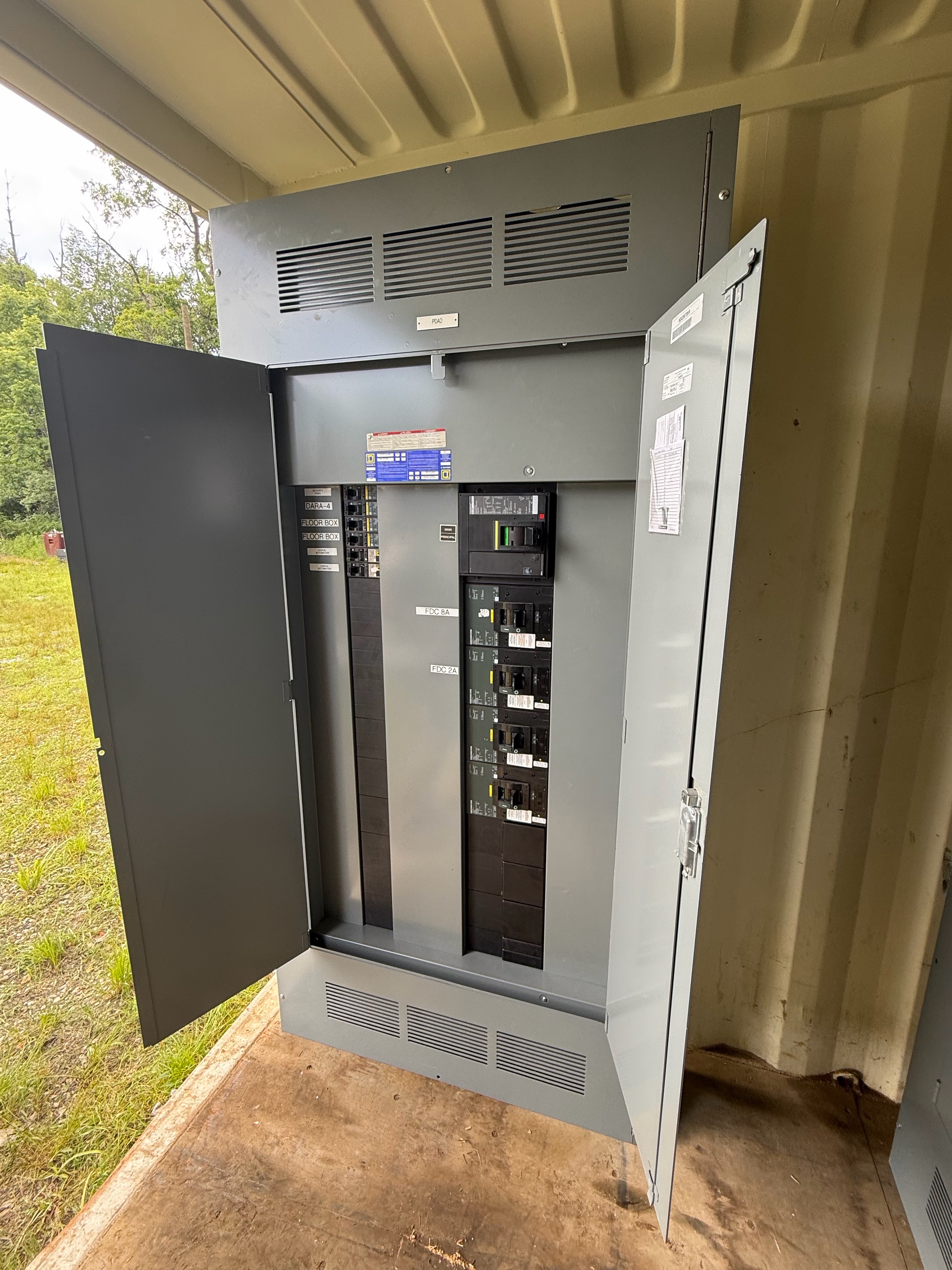
Keep system and equipment ratings distinct
A building’s nominal system voltage describes the electrical system; an assembly’s voltage marking describes the equipment rating shown on its nameplate or other records. A 120/208 V system description alone does not establish an assembly’s voltage rating, and a 600 A figure does not establish which assembly or device it describes. In an upgrade, service documentation and assembly markings may refer to different parts of the installation. We report each value only when supported by existing records, identifying whether it is a nominal system voltage, assembly voltage, or continuous-current marking. We do not assume both figures belong together, infer a voltage class, or claim compatibility with another installation.
Read ampere details as separate fields
“600 A” by itself may not identify an assembly’s continuous-current rating or a protective device’s rating. Existing documentation may separately show assembly continuous current, breaker frame, breaker trip, or interrupting rating; these are distinct values, not substitutes for one another. A frame marking does not establish a trip setting, and none of these figures alone demonstrates suitability for a particular application. For a purchase assessment, share available records that identify the equipment and preserve the exact wording and units shown. If a field is absent or unclear, we leave it unconfirmed rather than asking a seller to test, measure, or open equipment. Each proposed asset is reviewed individually; an offer or acceptance is not guaranteed.
Use records already available
Useful materials can include existing asset lists, purchase or maintenance records, project documents, and photographs of safely accessible equipment exteriors or exterior labels and nameplates. Take photographs only from positions authorized by the site and considered safe; never open a cabinet or photograph internal components. Records can help connect a marking to an asset without treating a service description as an assembly rating. Do not create new measurements, expose equipment, or prepare it for review. We buy used, surplus, and decommissioned electrical equipment across all voltage classes, including equipment from decommissioned data centers and shut-down power plants. Each item is assessed on its own records and circumstances.
Set out uncertainty and exclusions
Tell us what the records identify, what remains unknown, and whether the equipment is part of a larger upgrade or decommissioning plan. If documents conflict, preserve both descriptions rather than choosing a rating by inference. An assessment may depend on the specific asset, the available records, condition information already held by the owner, and practical removal arrangements. We do not require seller testing or preparation, and a request for review does not commit either party to a transaction. Equipment that cannot be identified or safely handed over may not be accepted. A purchase assessment is limited to the equipment agreed upon; it does not include unrelated demolition, disposal obligations, or hazardous-material remediation.
Agree payment and removal responsibilities
For an agreed purchase, the buyer makes a cash offer and pays upfront under the agreed transaction terms. Every offer and acceptance is individually assessed; neither a price nor a removal date is guaranteed. For the agreed purchase, the buyer covers necessary crane, rigging, disconnects, loading, freight, and hauling. The seller does not hire or pay a removal crew. Confirm in advance which assets are included, site access requirements, scheduling, and the handover boundary so responsibilities are clear. Electrical work, including any necessary disconnects, must be performed only by qualified, authorized personnel under site rules. Do not treat an initial discussion or records review as authorization to begin work.
Keep the handover within site controls
Never approach, touch, open, operate, test, disconnect, remove, or move equipment that is energized or potentially energized. Do not stage or handle equipment for photographs or an assessment. Any access, isolation, or electrical work must be managed by qualified, authorized personnel following the site’s procedures; the seller need not perform testing to request consideration. Exterior photographs are appropriate only when the equipment is safely accessible and the position is authorized by the site. If the facility is decommissioning or upgrading distribution, coordinate any agreed handover with its responsible site personnel and the buyer before removal begins. No purchase should be assumed until the assets, terms, and logistics are expressly agreed.