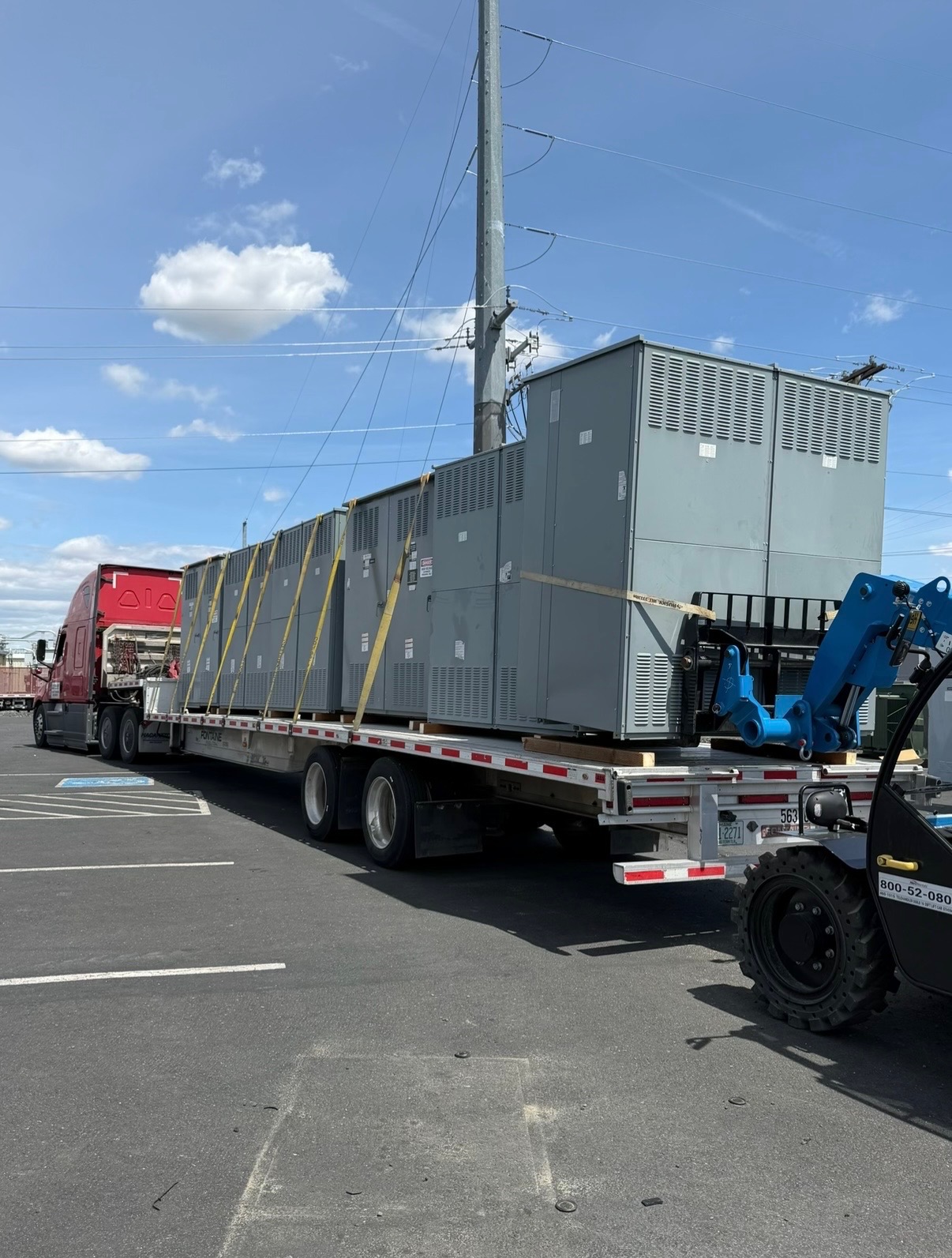
Start with ownership and a clear equipment inventory
Before discussing pickup, identify the equipment you own or are authorized to sell and describe it as accurately as possible. A site inventory might distinguish a switchboard from separate breakers, or note that several assemblies are being considered together. Include available manufacturer and nameplate information, approximate dimensions, quantity, and whether the gear is installed or already removed. Do not approach or handle equipment to gather details. Safe exterior nameplate photographs are useful only from an authorized safe position. Buyers assess assets individually; an inventory supports review but does not guarantee acceptance.
Ask what vehicle limits apply at the site
“Can a truck get in?” is not specific enough to plan a pickup. Ask the site contact what vehicle types, lengths, heights, axle loads or turning clearances are permitted, and whether those limits differ between the entrance and loading area. For example, a vehicle suitable for an accessible staging area may not be allowed near a building. Share the restrictions before a pickup plan is discussed; do not assume a particular truck can enter. If limits are uncertain, request the site’s written access rules or measurements from someone authorized to provide them.
Separate route access from the equipment’s dimensions
The route may constrain a pickup even when the equipment itself appears manageable. Ask whether the approach includes gated sections, narrow internal lanes, weight-controlled surfaces, low clearances or times when access is prohibited. These are questions for the site, not assumptions about local roads. Compare route limits with the proposed vehicle and the dimensions of the load. A restriction might favor a smaller vehicle with additional trips, if permitted, while another site may allow a larger vehicle to reduce handling. Neither choice should be assumed feasible until access rules are confirmed.
Clarify loading space and unloading restrictions
Ask where a vehicle may wait, turn and load, and whether the site limits equipment staging, lifting operations or time on the premises. A loading point close to the gear may reduce travel within the site, but a remote approved area could be the only permitted option. Clarify who controls access and whether the loading zone must remain clear for other operations. Also ask whether there are restrictions on the buyer’s vehicle or lifting equipment after it leaves the site. Record the answers in writing so the pickup plan reflects both loading and departure conditions.
Match removal planning to qualified electrical work
Installed equipment requires a removal plan that respects electrical hazards and site procedures. All electrical work, including isolation and disconnection, belongs to qualified, authorized personnel working under the site’s rules. The buyer’s coverage of disconnects does not authorize anyone to bypass those rules or perform work without approval. The seller need not test equipment or prepare it for sale, and nobody should operate, open, touch, approach, test, disconnect, remove or move energized equipment. Confirm who is authorized to coordinate the work and what site approvals are required before discussing lifting or loading.
Compare handling options without committing prematurely
Crane, rigging, loading and hauling needs depend on the equipment, access and site restrictions. A crane may be impractical where overhead clearance or setup space is limited; rigging or a different loading method may also be constrained by the equipment’s installed position. Ask what information the buyer needs to assess those options, such as safe exterior dimensions and written access limits. The buyer pays freight and covers crane, rigging, disconnects, loading and hauling as applicable to an agreed plan. These services do not establish that a particular method or removal outcome is available.
Make the offer decision with payment and ratings in view
After reviewing the equipment and pickup constraints, compare the proposed scope with what the site can authorize. This independent buyer purchases used, surplus and decommissioned electrical equipment from sources including decommissioned data centers and shut-down power plants, across all voltage classes; assets are assessed individually. Cash offers and upfront payment are available, without requiring seller testing, but acceptance, price and timing are not assured. Keep assembly, breaker, frame, trip, nominal voltage and ratings distinct when documenting gear: a breaker rating alone does not describe the complete assembly or establish compatibility. Confirm written terms before proceeding.