Build an inventory from records before considering removal
If a high-bay busway project leaves equipment available, start with the latest one-line diagrams, layout drawings, schedules and maintenance records already in the owner’s possession. Use them to make a preliminary count of straight runs, elbows, hangers and tap-off units, noting drawing references or area labels that help reconcile discrepancies. Records can be outdated, so mark quantities as documented rather than verified and flag sections affected by later changes. A tap-off unit is a distinct item from a length of busway; record it separately instead of treating every attached component as part of a straight run. This approach helps establish what is being offered without requiring seller testing or physical handling for identification.
Describe completeness without assuming every part matches
Two visually similar sections are not necessarily interchangeable. Record any manufacturer or catalog information visible on safely accessible exterior nameplates, along with the wording and rating information shown in existing records. Distinguish the busway assembly from its tap-off units and accessories, and keep elbow counts separate from straight-run counts. If records indicate different systems or generations, list those groups separately rather than combining them into one presumed-compatible lot. A break in the documented route may mean an elbow, end component or connector is missing, but do not infer a complete system from a drawing alone. The buyer can assess the offered inventory individually; no universal compatibility or suitability conclusion follows from an item count.
Plan overhead access around qualified removal
Removal access can shape the practical value of an otherwise well-documented lot. If busway is above production equipment, occupied work areas or fixed obstructions, identify those constraints in site records and discuss available access routes with the site’s authorized electrical and rigging personnel. Ask whether overhead lifting points, floor capacity limits, aisle restrictions or restricted work windows affect the proposed method. Electrical disconnects and all other electrical work must be performed by qualified, authorized personnel under site rules; do not treat a buyer’s interest as authorization to alter an installation. Crane and rigging needs, loading space and the path from the work area to pickup vehicles should be considered before a removal plan is agreed.
Balance recovery value against removal complexity
A large count of straight runs may look attractive, yet long overhead sections can require more coordinated rigging and loading than shorter, accessible pieces. Conversely, elbows and tap-off units may be worth documenting separately even when their quantities are modest, because they define what the offered lot includes. Hangers also matter to inventory completeness, but their presence does not establish that they can be reused or that removal is straightforward. Compare the cost and complexity of separating areas with the advantage of presenting a clearly bounded lot. If some sections are inaccessible or records cannot resolve their identity, state that uncertainty rather than counting them as confirmed available equipment. Assessment remains item-specific, not a guaranteed outcome based on volume.
Share useful information without unsafe inspection
For an initial review, provide record-based counts, the equipment’s general setting, known access constraints and any ownership or sale-authority details. Photographs should be limited to safely accessible exterior nameplates or equipment, taken only from authorized safe positions; never approach or handle equipment to obtain an image. Do not open covers, test assemblies, disconnect components or ask unqualified staff to verify a route. Seller testing and seller preparation are not required. If a record is unclear, label the information unknown and let qualified site personnel address technical questions through approved procedures. Clear limits are more useful than an unsupported claim that all sections are complete, matched or ready for removal.
Coordinate an offer and pickup as separate decisions
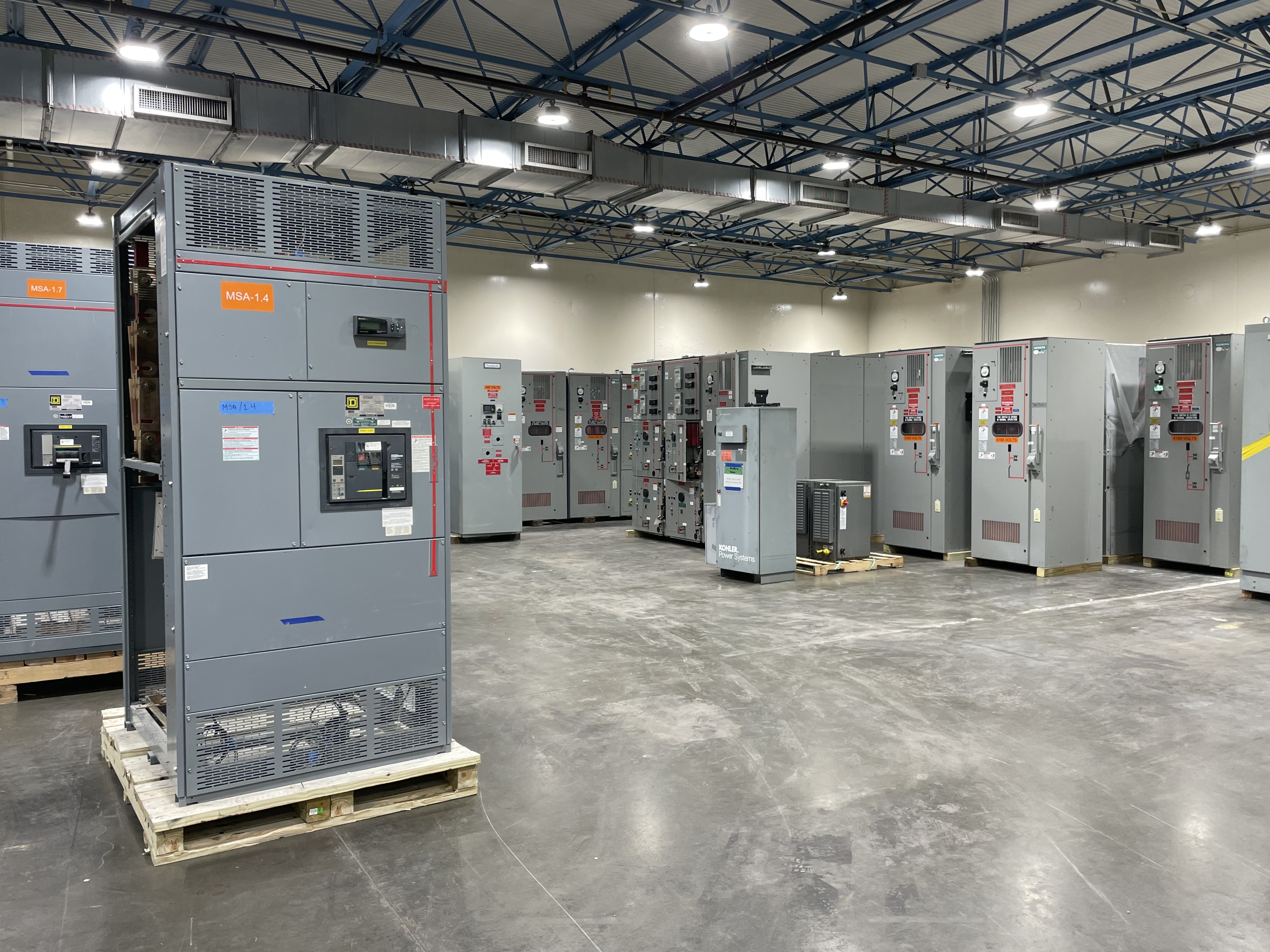
We buy used, surplus and decommissioned equipment across all voltage classes, including equipment from decommissioned data centers and shut-down power plants; that does not mean every offered busway lot will be accepted. We assess the inventory and circumstances individually. If an offer is accepted, payment is upfront, with a cash offer considered for the equipment. Buyer-paid freight can include crane, rigging, disconnects, loading and hauling, subject to the agreed scope and site requirements. Confirm what equipment is included, who controls site access, and how qualified personnel will complete electrical work before scheduling any pickup. Do not assume a specific price, acceptance decision, removal method or timetable until the details are reviewed.