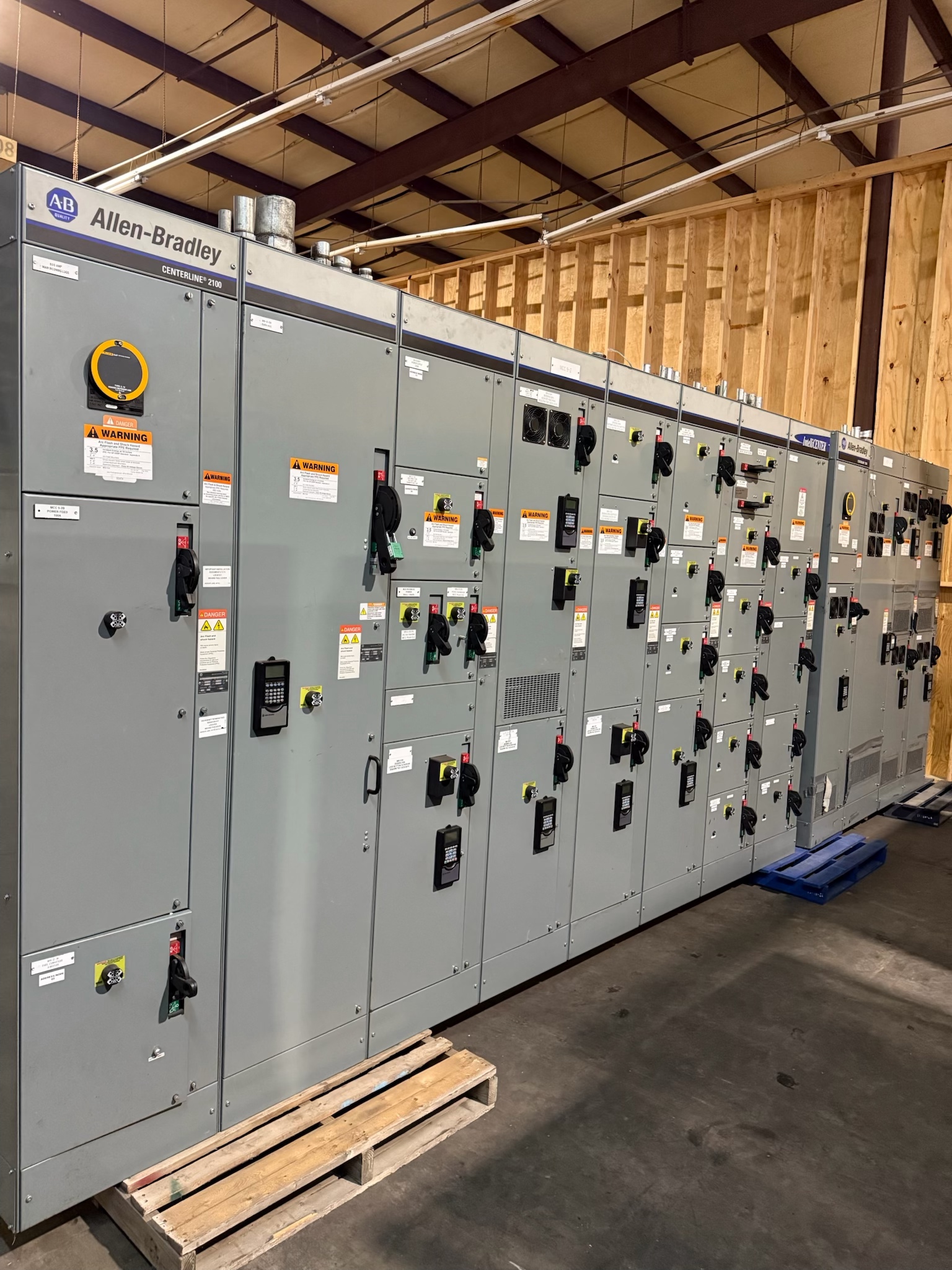
Describe the lineup as it stands
Start with the physical arrangement, not an assumption that the lineup is a complete, matched assembly. Record how many cabinets are present, their order, and whether sections appear joined or separated, using observations from an authorized safe position. Note visible gaps, blank covers, and apparent vacant breaker positions without removing covers or devices. If the original lineup drawing is available, identify it as a reference rather than proof of present configuration. A buyer can then distinguish a partial assembly from a complete lineup and assess the described assets individually.
Separate cabinets from missing positions
List each cabinet or section as an asset, then describe missing breaker positions as absences—not as breakers included in the offer. For example, a lineup may have three cabinets, with one visible vacant position in the middle section; that is clearer than calling it a three-breaker lineup. Record cabinet identifiers and visible position labels where safely readable. Do not infer that a vacant position means a breaker is missing, compatible, or available elsewhere. This distinction affects completeness and potential value, while keeping the listing accurate if the lineup was modified over time.
Inventory spare devices independently
If spare breakers or other devices are stored separately, list them on their own lines rather than implying they remain installed. Include the visible manufacturer, catalog or type markings, device count, and any legible nameplate ratings; note unreadable fields instead of guessing. A breaker’s frame, trip unit, poles, and rating are not interchangeable descriptions, and a device that appears to fit an opening is not thereby confirmed compatible. Do not extract installed equipment for photographs or inspection. For stored devices, provide only information obtained without unsafe handling; a buyer may assess them individually alongside the cabinets.
Document condition without testing
Explain what is visibly known: for instance, whether a cabinet is present, whether exterior surfaces show impact damage, or whether labels are legible. Separate direct observations from records supplied by a prior owner, and identify unknowns such as operating history or internal condition. No seller testing or preparation is required. Do not open, touch, operate, approach, disconnect, or move electrical equipment to gather information; electrical work belongs to qualified, authorized personnel following site rules. Safe photographs should show only accessible exterior nameplates and equipment from authorized safe positions. They can clarify an inventory, but cannot establish internal condition.
Compare completeness with separation costs
Keeping a partial lineup together may preserve useful context: cabinet order, labels, and the relationship between sections remain easier to describe. Separating cabinets or combining unrelated spare devices into one lot may make the inventory harder to evaluate and could change handling needs. Conversely, a separately documented spare device may warrant individual assessment rather than being treated as part of an incomplete assembly. Ask whether the buyer wants one inventory covering the lineup and separate device lines, and whether any item should be evaluated independently. Do not dismantle equipment to improve a listing; describe its existing state instead.
Plan access and pickup responsibilities
Before discussing removal, provide access constraints that can be reported without entering restricted areas: known doorway limits, loading access, overhead constraints, or whether the equipment is indoors, if that information is safely available. The buyer pays freight and covers crane, rigging, disconnects, loading, and hauling when arrangements are accepted for the transaction. These logistics still depend on the specific assets and site conditions; do not assume a particular lift plan or pickup date. Any electrical disconnect or other electrical work must be handled by qualified, authorized personnel under site rules, with safe access coordinated before removal.
Request an offer on a clear inventory
A seller must own the equipment or have authority to sell it. Send the cabinet-by-cabinet description, separate spare-device list, safely obtained markings, available records, and photographs limited to safe exterior views. An independent buyer purchases used, surplus, and decommissioned electrical equipment from sources including decommissioned data centers and shut-down power plants, and buys across voltage classes. That does not guarantee acceptance of a particular lineup or device. Assets and offers are assessed individually. The buyer offers cash and pays upfront when a transaction is agreed; ask how the proposed inventory and pickup scope are reflected in that offer.