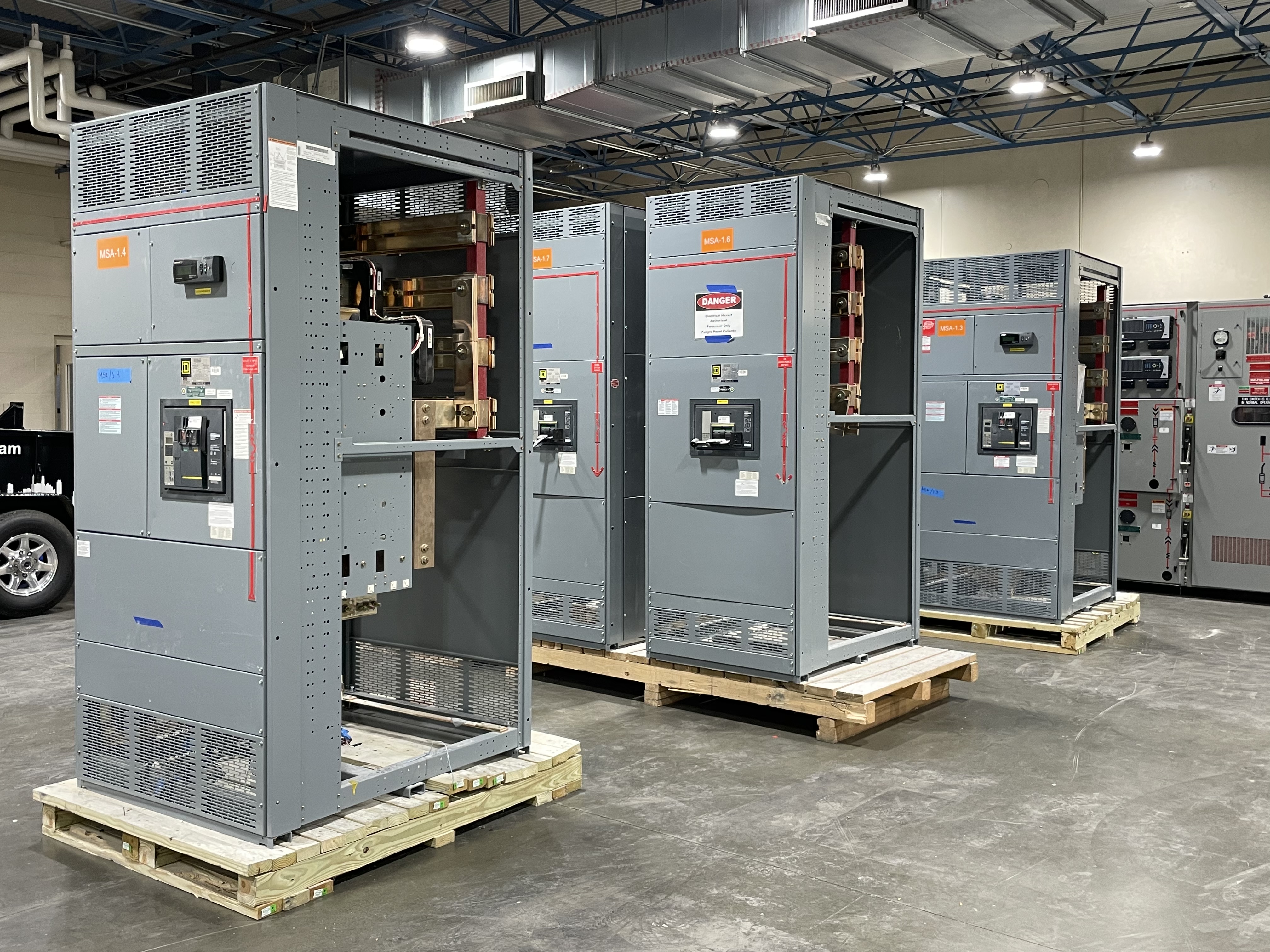
Define the section boundary without disturbing the lineup
Start with the planned expansion boundary, not an assumption that a visible section is independently removable. A lineup may include connected sections, common bus, or control wiring that makes the apparent dividing point different from the electrical boundary. From an authorized safe position, document the exterior arrangement and any existing section labels; do not open enclosures, remove covers, or touch equipment to find a seam. Note which sections are intended to remain and which are surplus, and identify whether drawings or existing records clarify the division. If records are incomplete, say so. That uncertainty affects individual assessment and planning, but does not require seller testing or invasive inspection.
Map cable pathways as constraints, not demolition instructions
Cables, tray, conduit, and overhead pathways can block access or limit the angle available for extraction, even when a section appears close to an exit. Record visible obstructions and their approximate relationship to the equipment, using existing plans or measurements taken from safe, authorized positions. Avoid moving cables or asking anyone to clear a path as a preliminary step. The practical tradeoff may be between preserving a pathway serving retained equipment and choosing a different removal sequence or route. Tell the buyer what must remain in place. Any electrical disconnection or alteration belongs to qualified, authorized personnel working under site rules; it is not a seller preparation task.
Check the full route and its clearances
A usable route has to accommodate the equipment’s dimensions and handling method, not merely a person walking through. Consider door openings, turns, thresholds, overhead restrictions, floor transitions, and the destination for loading. Share known doorway or corridor dimensions and photographs only when they can be taken from safely accessible exterior positions without approaching energized equipment. If a narrow turn or low obstruction creates uncertainty, identify it rather than estimating that the section will pass. A route that avoids one cable pathway may introduce a tighter turn elsewhere. That tradeoff can shape whether a section is worth assessing as a separate item and what access arrangements need review before any work is planned.
Distinguish what is being offered from its ratings
Describe the assembly and the intended surplus boundary separately from any breaker information. A breaker’s frame and trip details do not by themselves define the rating of the complete switchgear assembly; nominal voltage and other equipment ratings also matter, and should be reported only from legible existing documentation or safely accessible exterior nameplates. Do not open a door, remove a cover, or move anything to obtain a better view. If the nameplate cannot be read safely, state that limitation. Buyers consider all voltage classes, but acceptance and value depend on the individual equipment, configuration, condition information, and practical removal constraints—not voltage class alone.
Coordinate access and removal responsibility
Before any proposed removal, establish who controls access, what equipment must remain in service, and which site procedures apply. The buyer covers crane, rigging, disconnects, loading, freight, and hauling as applicable to an individually assessed transaction; this is not permission for unqualified work or an assurance that a particular removal method will fit. Electrical work must be performed by qualified, authorized personnel under site rules. Share access restrictions, permitted work windows if known, and any route limits, but do not disconnect, rack out, move, or handle equipment yourself. The decision may depend on whether safe, authorized access and a workable route can be coordinated.
Request an assessment with clear commercial terms
For an inquiry tied to a Milton pickup location, provide the equipment description, section boundary, available records, visible access constraints, and ownership or authority to sell. No seller testing or preparation is required. Offers are assessed individually; if the equipment is a fit, the buyer offers cash and pays upfront under the agreed transaction terms. Neither acceptance nor price is guaranteed before assessment. Ask what information is still needed and how the proposed scope distinguishes the surplus section from retained gear. A clear account of cable obstructions and route clearance helps evaluate the real removal problem without asking you to alter the room, expose internal components, or make unsupported claims about condition.