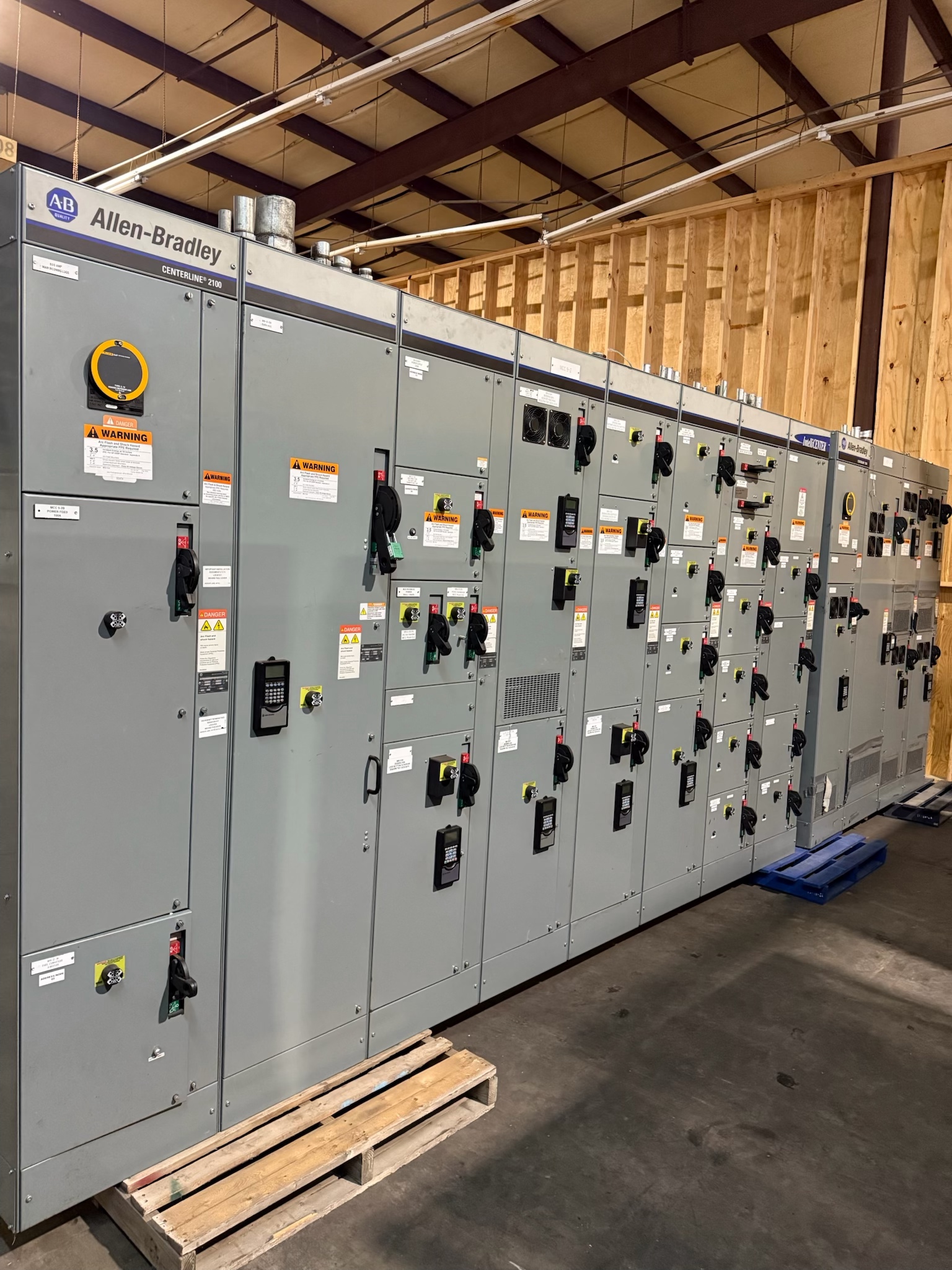
Separate the assembly identity from breaker identities
Start the inventory with the assembly: record its manufacturer, catalog or type designation, and nameplate details that are legible from a safely accessible exterior. Then list each breaker by its own visible label, keeping manufacturer, model or catalog identifier, and ratings in separate fields. For example, an assembly label naming one brand and a breaker label naming another is a documented mismatch, not proof of fit or proof that the equipment is unusable. Do not combine the entries into one brand description. This separation gives a buyer a clearer basis to assess the actual inventory.
Describe mismatches without deciding compatibility
A breaker may have a different label from the assembly, or several breakers in one lineup may not share a manufacturer or visible family designation. Record exactly what is readable and mark uncertain or obscured text as such; do not infer a catalog number from appearance. Compatibility can depend on equipment-specific requirements that cannot be established by a brand name alone. If qualified personnel have existing records, they may help clarify provenance, but a seller should not treat those records as a substitute for a technical determination. The purchasing assessment remains individual and does not certify an assembly-breaker pairing.
Keep ratings in their proper categories
Capture each rating as labeled and preserve its context. An assembly’s nominal voltage or rating is not automatically the same as a breaker’s voltage rating, frame designation, trip rating, or interrupting rating. A frame identifies a breaker size or family designation; a trip label relates to its protective setting or rating, depending on the equipment and marking. Avoid describing the whole lineup with a single number copied from one breaker. If a label is unclear, say “not legible” rather than estimating. These distinctions reduce confusion during review without making claims about suitability for a particular application.
Choose the level of detail that helps identify the lot
For a small lot, a concise schedule may be enough: assembly count, separately identified breaker count, and any visible differences in labels or condition. For a larger or mixed lot, a row per breaker can prevent a few mismatched items from disappearing inside a broad “switchgear” description. Note whether a breaker is visibly installed in an assembly or stored separately, without moving equipment to improve the inventory. If quantities are uncertain, label them approximate. This detail helps explain what is offered while leaving technical inspection, acceptance, and valuation to the buyer’s individual assessment.
Document only from an authorized safe position
Useful photographs may show exterior nameplates and accessible equipment surfaces, provided the photographer is authorized and can remain in a safe position under site rules. Never approach, open, touch, operate, test, disconnect, rack out, remove, move, or handle energized equipment to obtain an image or read a label. Do not remove covers or reach around barriers. If the necessary information is not safely visible, report that limitation and let qualified, authorized personnel determine whether further access is permitted. Photos can support identification, but they do not establish electrical condition or compatibility.
Plan responsibility and pickup logistics separately
Before discussing removal, confirm that the seller owns the equipment or has authority to sell it, and identify access constraints, approximate dimensions, and loading conditions only through information safely available. Electrical disconnects and other electrical work must be performed by qualified, authorized personnel under site rules; the seller need not test or prepare the equipment. Depending on the assessed lot and site, the buyer covers freight and hauling and can arrange crane, rigging, disconnects, and loading. No removal plan should assume that energized work is acceptable or that every site presents the same handling requirements.
Compare the offer with the documented inventory
When considering a cash offer, check that the described scope distinguishes the assembly from separately listed breakers and calls out known label mismatches rather than implying a verified combination. The buyer purchases used, surplus, and decommissioned electrical equipment across all voltage classes, including equipment from decommissioned data centers and shut-down power plants; each asset and offer is assessed individually. No seller testing is required, and payment is made upfront if a purchase proceeds. Acceptance, price, timing, and logistics depend on the specific assessment. Clear records make the decision more grounded without promising an outcome.