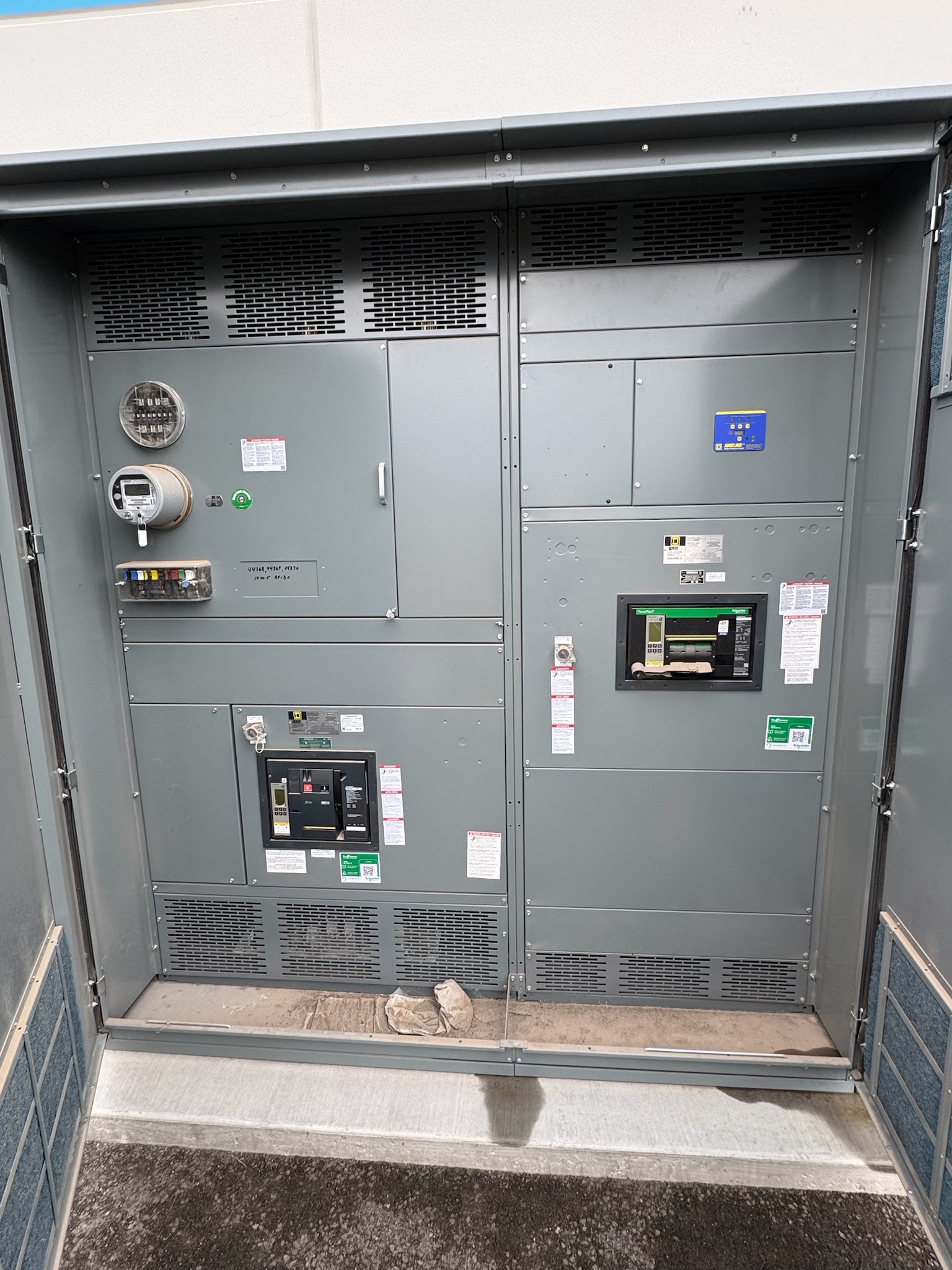
Map ownership before identifying saleable equipment
In a possible Newnan-area shutdown, do not assume every cabinet or disconnect serving a building belongs to its owner. The customer may own service entrance switchgear, while the utility owns or controls upstream equipment, meters, or other interface components. Ownership depends on the applicable service documents and installation records, not appearance alone. Ask the property owner or authorized representative to identify the proposed sale boundary and confirm it against utility records. If ownership is uncertain, hold that item out of the sale scope until the responsible parties resolve it; visual proximity does not establish authority to sell.
Get approvals before scheduling electrical work
Even confirmed customer ownership does not authorize immediate disconnection. Utility approval may be needed at the interface, and the property owner or site operator may impose separate outage, access, safety, and contractor requirements. Before discussing removal dates, ask who approves the work, what written release or outage coordination is required, and who may authorize access. All electrical work must be performed by qualified, authorized personnel under site rules. The buyer can coordinate removal scope, but utility and site approvals are prerequisites, not paperwork to sort out after equipment has been disturbed.
Define the boundary in the equipment inventory
A useful inventory separates customer-owned assemblies from utility-owned or disputed items rather than listing an entire service as one lot. Record each asset’s location description, visible equipment type, and whether ownership is confirmed, pending, or excluded. Where a lineup contains multiple sections, note which sections are within the authorized sale boundary and whether connected components remain in service. Do not ask anyone to open covers, approach energized equipment, or expose labels to complete the inventory. This clear boundary helps prevent a quote for customer assets from being mistaken for permission to remove adjacent utility equipment.
Use safely obtained nameplate details to assess assets
When an exterior nameplate is safely accessible from an authorized position, its photograph or transcribed details may help identify an assembly for individual assessment. Do not approach equipment to get a better image, open doors, or take photographs during electrical work. Distinguish the assembly from its breakers, and record visible breaker frame and trip information separately where available; these describe different aspects of the equipment. Note nominal voltage and stated ratings as printed, without inferring compatibility or condition. Missing, obscured, or incomplete details can be reported as unknown rather than guessed.
Compare sale scope with removal constraints
A smaller, clearly bounded sale may be easier to authorize than a larger package that includes disputed interface gear, but it can leave the seller responsible for managing remaining property. Conversely, combining confirmed customer-owned sections may simplify valuation while requiring more outage coordination and site access. Discuss which assets are included, what remains installed, and who controls each work boundary before accepting a scope. If utility-owned components cannot be included, exclude them expressly. Do not treat a buyer’s interest in surplus equipment as approval to alter a connected service or remove equipment beyond the documented boundary.
Prepare records without testing or handling equipment
Useful records can include ownership documents, available one-line drawings, prior asset lists, and safely accessible exterior nameplate information. Share only what the seller is authorized to disclose, and identify documents as current or potentially outdated. No seller testing or equipment preparation is required; do not energize, operate, inspect internally, disconnect, move, or handle equipment for a sale inquiry. A buyer may consider equipment across all voltage classes, but each asset and offer is assessed individually, with no assumption that a particular item will be accepted. State uncertainties plainly so the assessment can reflect the actual information available.
Agree on logistics and payment terms for eligible assets
For confirmed customer-owned equipment that is approved for removal, clarify the proposed work scope, access conditions, and responsibility for coordinating qualified personnel before logistics are arranged. The buyer covers crane, rigging, disconnects, loading, freight, and hauling for eligible purchases; sellers are not required to hire crews or conduct tests. Offers are assessed individually and may include cash paid upfront, with no guaranteed acceptance, amount, or schedule. Confirm that the seller has authority to sell and that utility and site approvals are in place before work proceeds. The pickup location is Newnan; it does not imply a buyer office there.