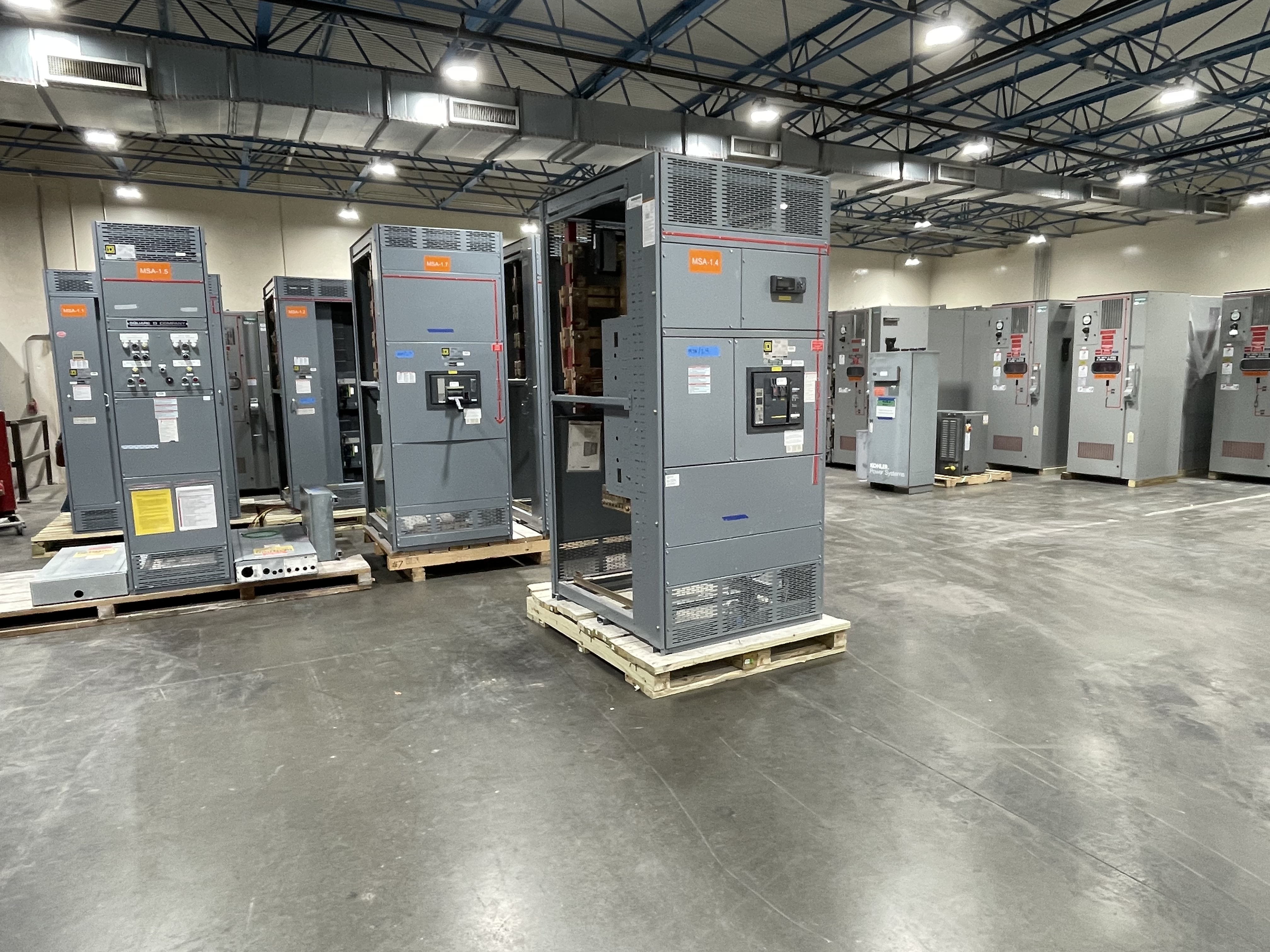
Define the sale boundary by cubicle
Start with a lineup-level drawing or equipment schedule, then identify each proposed cubicle by its exact designation and physical position. Record which sections are included, which remain in service, and which are excluded; avoid descriptions such as “the left side” that may be ambiguous from another viewpoint. Note visible nameplate information and the equipment’s general configuration only where safely accessible. A cubicle boundary is not automatically an electrical isolation boundary: bus connections, control wiring, shared enclosures, or supports may cross the apparent division. Ask the facility owner to confirm the intended release boundary with qualified authorized electrical personnel before treating any listed section as available for sale or removal.
Separate sale scope from service dependencies
A cubicle can be physically distinct yet depend on neighboring sections for bus continuity, control power, protection, or the supported operating arrangement. Document known dependencies and mark unresolved ones for the facility owner’s electrical review. For example, if a proposed feeder section is beside a retained section, clarify whether the owner intends to preserve the adjacent bus assembly or has a separately approved plan for the interface. Do not infer that a barrier, blank, or visible joint makes separation safe or complete. The buyer can assess the offered equipment as described, but decisions about system configuration, isolation, disconnection, and continued service belong to qualified authorized personnel under site rules.
Build the release schedule around owner approval
For a staged jobsite release, ask who has authority to approve each cubicle and what conditions must be met before access is granted. Record target release windows as planning assumptions, not guaranteed pickup dates, and identify dependencies such as facility shutdown approval, access restrictions, or completion of the owner’s electrical work. If one section may be released before another, note whether the owner will hold the later section and revise the available scope accordingly. This distinction matters when an offer is assessed against a specific inventory list: changes in quantity, configuration, condition, or release timing may affect the individual assessment. Confirm the current list before coordinating a collection.
Document identification without unsafe inspection
Useful records can include manufacturer and assembly identification, cubicle labels, breaker designations, visible ratings, and clear exterior photographs of safely accessible nameplates. Take photographs only from authorized safe positions, without approaching, opening, touching, or operating equipment for the image. Do not ask site staff to expose internal compartments or obtain details from energized gear. Distinguish the switchgear assembly from its individual breakers, and record frame and trip information separately when safely available; they are not interchangeable descriptions. Likewise, capture nominal voltage and stated ratings as marked rather than inferring them from appearance. If information is unavailable, mark it unknown for review instead of arranging seller testing.
Weigh continuity against removal logistics
Keeping adjoining sections in service may constrain access, work windows, and the order in which equipment can be handled. The facility owner should explain applicable site rules, permitted access areas, and scheduling limits; qualified authorized personnel must perform electrical work, including disconnects, under those rules. The buyer can assess whether crane, rigging, loading, and hauling arrangements appear feasible from the agreed scope and access information. If a route, lifting point, or clearance is uncertain, flag it for coordination rather than asking anyone to move equipment or improvise a lift. Buyer-paid freight and handling can include crane, rigging, disconnects, loading, and hauling, subject to individual assessment and site coordination.
Align the offer with the final released inventory
Before requesting an assessment, send the cubicle-by-cubicle list, identify retained sections, summarize known dependencies, and state which release assumptions remain pending owner approval. Include safe exterior nameplate photographs where available, but no seller testing or preparation is required. We buy used, surplus, and decommissioned electrical equipment across all voltage classes, including equipment from decommissioned data centers and shut-down power plants; acceptance and offers are assessed individually, without guaranteeing a particular result. Offers are cash and payment is made upfront for an accepted transaction. If the owner changes the release boundary or schedule, provide an updated inventory so the assessment and collection plan reflect what is actually authorized for sale.