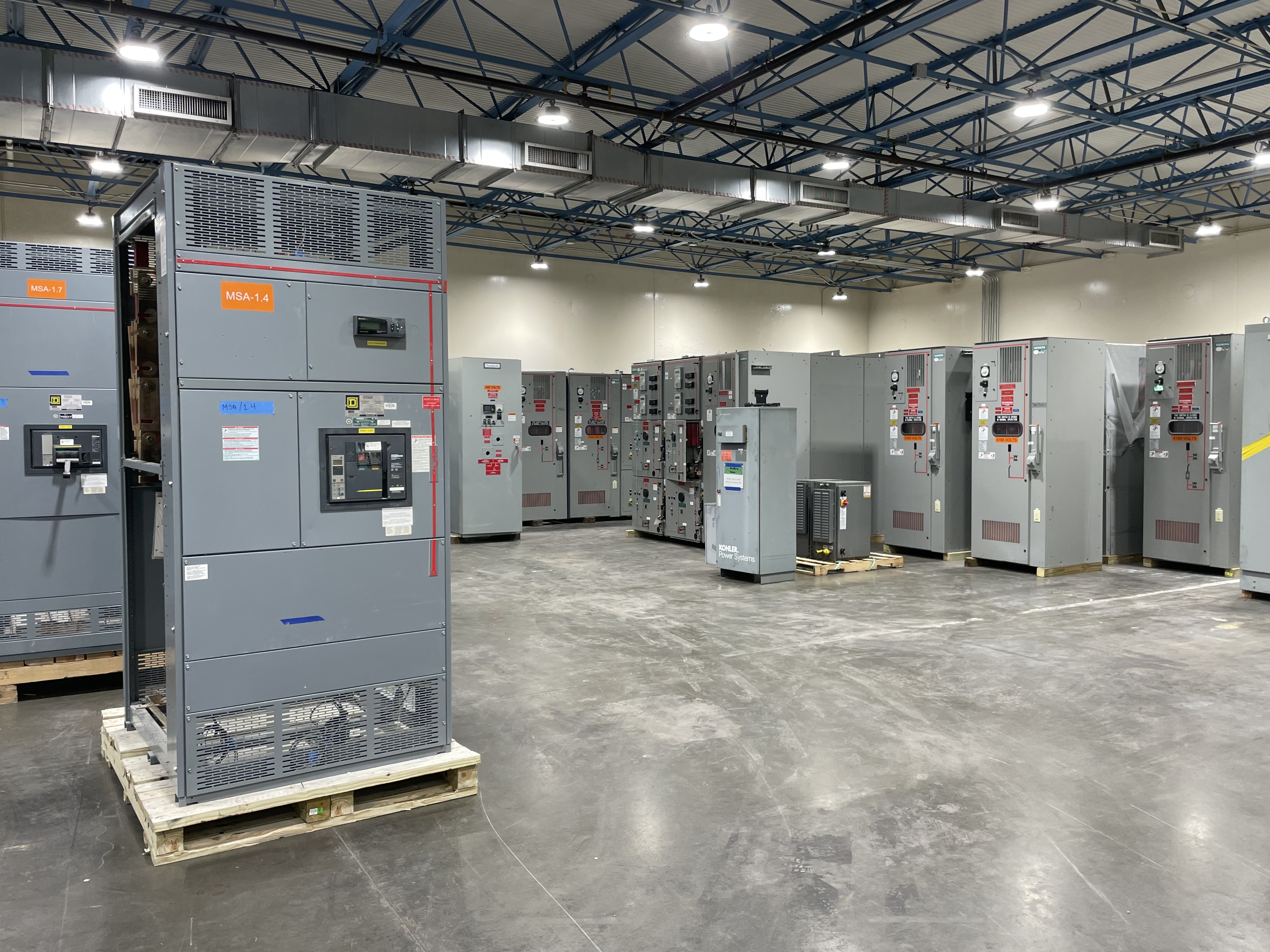
Keep replacement design separate from surplus evaluation
The incoming switchboard is selected for the future installation; the outgoing switchboard is evaluated as a distinct used asset. Do not assume that similar appearance, voltage class or manufacturer makes their assemblies interchangeable. For a sale review, identify the outgoing lineup by its own nameplate information and describe its present configuration, known history and apparent condition only from authorized records or safe exterior views. If the new design changes feeder arrangement or capacity, that does not by itself establish the old equipment’s resale value. Share the replacement project’s broad timing separately from the outgoing asset details, so assessment can focus on what is actually being offered rather than on the new purchase specification.
Plan the phased changeover around service boundaries
A phased changeover may preserve some services while other distribution sections are replaced, but sequencing belongs to the facility’s qualified electrical team. Before discussing pickup, establish which lineup is outgoing, whether it is still installed, and when the site expects it to become available. A later removal date may be more practical than an early one if the equipment remains part of the operating system. Conversely, retaining it can affect access, staging and schedule coordination. Ask the project lead to document the planned isolation and removal window, the responsible authorized personnel, and any site restrictions. A buyer’s interest in the surplus asset should not drive switching decisions or disturb essential services.
Describe the assembly and components precisely
“Switchboard” alone may leave important questions unanswered. Record the assembly identification and lineup arrangement where safely readable, then distinguish included breakers from the board itself. If breaker details are available, list each breaker’s identification and ratings separately; do not confuse a breaker rating or trip setting with the assembly rating or nominal system voltage. Note whether bus sections, metering, covers or other components are included, missing or intended for reuse. Use existing drawings and inventory records when available, and flag uncertainty rather than infer specifications. These distinctions help an individual assessment reflect the actual outgoing package, without implying that every component is compatible with another switchboard or suitable for a particular application.
Capture useful information without field testing
No seller testing or preparation is required for an initial review. Send available records such as equipment schedules, one-line diagrams, prior inventory sheets and known service history, while identifying which documents may no longer match the installed configuration. Safe photographs should be limited to nameplates and exterior views that are safely accessible from authorized positions; never approach, open, touch, operate or test equipment to obtain an image. Do not photograph from a position that requires entering a restricted area or getting near energized gear. If information cannot be obtained safely, say so. A buyer can assess the opportunity from the information provided and determine what further review, if any, is appropriate.
Coordinate removal logistics with the site team
Removal is a separate logistical decision from the modernization sequence. If the equipment becomes available, discuss access constraints, loading space, lifting access and the site’s permitted work windows before arranging a pickup. The buyer covers crane, rigging, disconnects, loading, freight and hauling; electrical work must be performed by qualified, authorized personnel under site rules. The seller need not hire a crew or handle the equipment. Confirm who can authorize access and what coordination the site requires, but do not treat a buyer’s logistics as permission to interrupt service or bypass facility procedures. Asset condition, access and project timing are assessed individually, so avoid committing to an outcome before review.
Compare offers against the project’s real priorities
When evaluating an offer, compare the proposed transaction with the cost and operational consequences of retaining the outgoing lineup until a later phase, not just with the replacement equipment budget. Share the desired decision window and any constraint on when the old assembly can leave, while recognizing that acceptance and terms depend on individual assessment. We buy used, surplus and decommissioned electrical equipment, including equipment from decommissioned data centers and shut-down power plants, across all voltage classes. For an accepted purchase, we offer cash and pay upfront; no seller testing is required. Share the Roswell pickup address and the contact authorized to coordinate access so the team can evaluate the actual loading route.