Start review before the replacement is ready
If a site expects replacement equipment to come online later, an early buyer review can clarify what information is needed and whether surplus assets may interest a buyer. It does not establish that equipment is available or reserve a pickup date. Keep the review separate from commissioning and cutover plans: site personnel determine operating dependencies, approved shutdown sequence, and release authorization. For example, a spare breaker may look redundant but remain part of an approved contingency plan. Record who owns that decision and when it will be revisited, rather than treating a preliminary asset list as permission to remove anything.
Define the boundary between operating and surplus
Describe each candidate asset by its present role and intended disposition: still in service, retained as a spare, or potentially surplus after an approved transition. This distinction matters when a lineup contains breakers serving different loads or sections that are not being replaced together. Ask site personnel to identify the exact boundary and dependencies in their records; do not infer that a unit is isolated or releasable from appearance. A buyer can review the proposed inventory, but cannot decide whether a circuit can be interrupted. If the boundary changes, update the inventory before seeking a revised assessment.
Build an inventory that supports a useful review
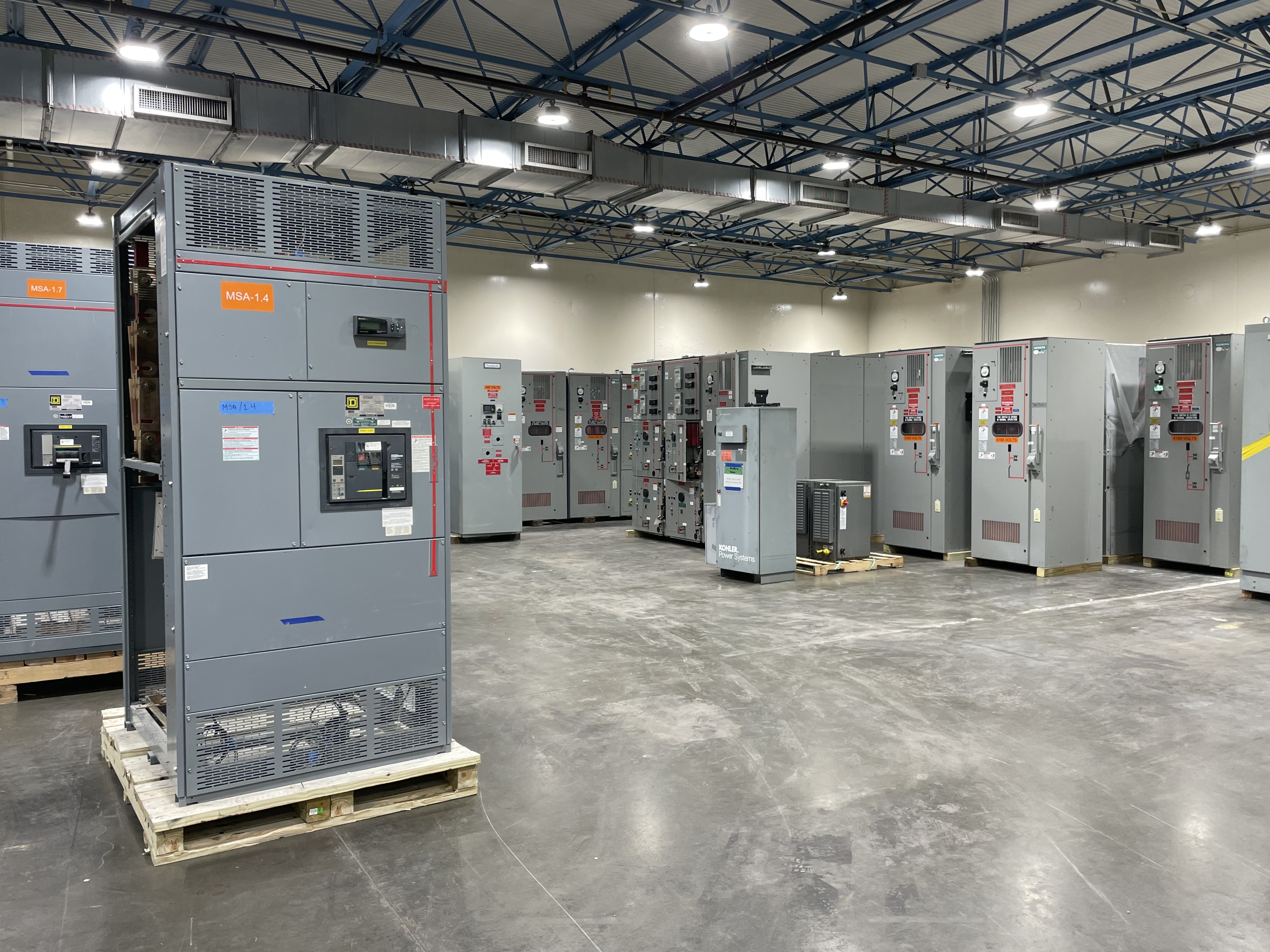
For each item, capture the equipment type, manufacturer and identifiers visible on its exterior nameplate, approximate quantity, and known condition or storage status. Distinguish a complete assembly from an individual breaker; for switchgear, record lineup sections separately where site records support that distinction. Note whether documents are available, but do not guess missing values. Safe photographs should show only exterior nameplates or equipment that is safely accessible from an authorized position. Never approach, open, touch, operate, test, disconnect, or move equipment to improve a photograph. A clear inventory reduces ambiguity without asking sellers to perform technical checks.
Keep ratings and scope distinct
Electrical descriptions can conceal important differences. A breaker’s frame and trip information are not interchangeable, and neither alone identifies the full assembly or its suitability for a particular duty. Record nominal voltage and available ratings from existing documentation or safely accessible exterior labels, identifying unknowns as unknown. Do not assume two assets are compatible because they look alike, share a brand, or have similar voltage labels. A buyer considers assets individually, and no universal compatibility or testing claim follows from an initial review. Qualified, authorized electrical personnel remain responsible for technical determinations under site rules.
Compare continuity, timing, and disposition options
The tradeoff is between gaining time to evaluate possible surplus and avoiding pressure on the replacement schedule. An early review may expose unanswered questions about ownership, quantity, documentation, or access while there is still time to resolve them. Waiting until cutover may leave less room for commercial review, but a buyer’s convenience is never a reason to accelerate shutdown or release. Ask what decision date is useful for the owner’s planning, and separately document the site’s own release conditions. If those conditions are not met, defer pickup planning; an estimated review window is not an operational authorization.
Understand commercial terms without assuming an outcome
For equipment the seller owns or is authorized to sell, the buyer may assess an individual offer for surplus or decommissioned assets, including equipment from a data center or power plant shutdown. The buyer offers cash and pays upfront when a purchase is agreed; acceptance, price, timing, and scope depend on the individual assessment. No seller testing or preparation is required, and the buyer considers equipment across all voltage classes, without implying every item will be accepted. Confirm in writing which assets an offer covers, what payment arrangement applies, and which party coordinates access and release.
Plan removal only after site authorization
Once site personnel approve release, coordinate access, loading space, lift constraints, and pickup boundaries with the buyer. The buyer covers agreed crane, rigging, disconnects, loading, freight, and hauling; electrical work must be performed by qualified, authorized personnel under site rules. Clarify which assets are included and any access conditions before scheduling, but do not let logistics determine shutdown sequencing. If the equipment remains energized or release status is uncertain, stop removal planning and defer to authorized site personnel. A careful handoff keeps the commercial review useful while operational continuity and site safety remain under the owner’s control.