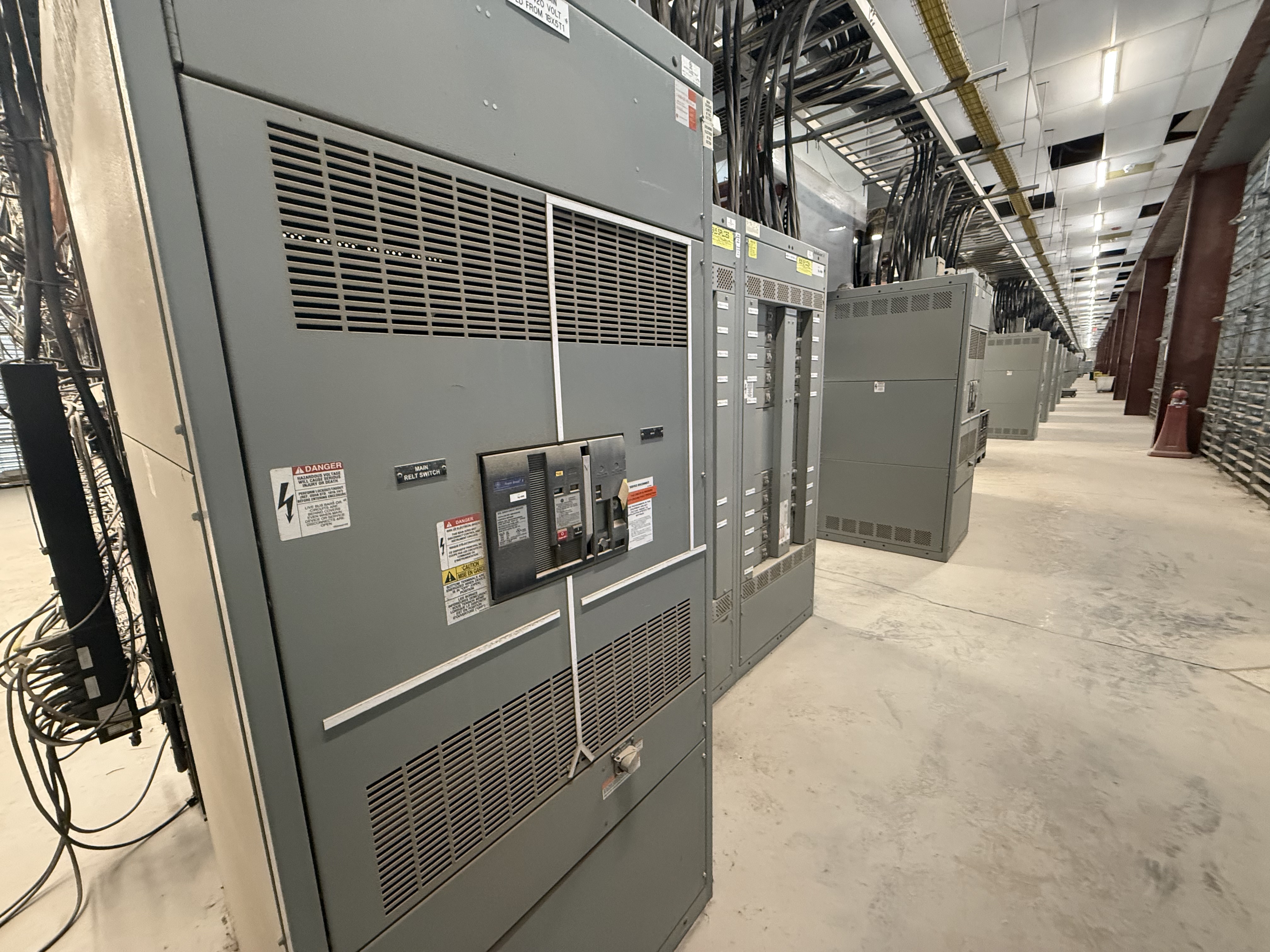
Separate route information from lift planning
For an initial assessment, report what the site already knows: whether access is by stairs or a service lift, the doorway and corridor configuration, known clearance limits, and any scheduled access restrictions. Identify whether those details come from drawings, facility records, or a site contact; do not estimate dimensions or create new measurements for the request. Such information helps frame a review, but it does not establish that a cabinet can pass, that a lift can carry it, or that a removal method is safe. A qualified professional must develop the lift and handling plan after reviewing the actual conditions and applicable site rules.
Describe the route in useful stages
A basement route may include several different constraints: the equipment room exit, a corridor turn, stairs or a lift, a loading-area transition, and the eventual vehicle access point. Describe known stages in order, noting doorways, landings, overhead obstructions, restricted hours, and any route sections the site identifies as unavailable. Clarify whether a lift is approved for material movement or whether its capacity and use rules are simply unknown. Do not assume a route is usable because people walk it, or that a doorway description resolves turning or handling space. Unknowns belong in the handoff for professional review, not in a seller-created extraction plan.
Use records without overstating what they prove
Useful existing records may include equipment schedules, one-line diagrams, room plans, prior access documentation, and nameplate information already recorded by the site. Keep ratings distinct: nominal system voltage is not the same as assembly voltage, and neither establishes continuous current, device frame, trip rating, interrupting rating, or compatibility. Report a value only when a record supports it, and label the record or source if known. Do not open cabinets, take internal photographs, test equipment, or obtain new measurements. Photos should be limited to safely accessible equipment exteriors and exterior labels or nameplates, taken only from site-authorized safe positions.
Set safe boundaries before any site visit
Never approach, touch, open, operate, test, disconnect, remove, or move equipment that is energized or potentially energized. Do not enter restricted areas or ask facility staff to bypass site controls for photographs or access information. Electrical work, including any isolation or disconnection needed for an agreed removal, must be performed only by qualified, authorized personnel under the site’s rules and procedures. The buyer’s review of records or exterior images is not an electrical assessment or authorization to work. If safe access is uncertain, stop gathering information and ask the site contact to determine what can be shared through approved channels.
Agree scope, exclusions, and removal responsibilities
Each purchase assessment and acceptance is individual; a review does not guarantee an offer, acceptance, price, or schedule. The buyer purchases equipment of all voltage classes and also considers equipment from decommissioned data centers and shut-down power plants, subject to assessment. For an agreed purchase, the buyer covers necessary crane, rigging, disconnects, loading, freight, and hauling under the agreed scope; the seller does not hire or pay a removal crew. The buyer makes cash offers and pays upfront for agreed purchases. An equipment purchase does not include unrelated demolition or hazardous-material remediation, so identify those as separate site responsibilities.
Prepare a controlled handoff, not a staged load
Share the available records, known route restrictions, safe exterior photos, and a site contact who can explain access procedures. Do not stage equipment, clear a route, fabricate lifting points, or arrange a crew before scope is agreed. If a purchase is agreed, coordinate timing, access approvals, work boundaries, and required site supervision with the buyer and qualified removal personnel. The professional team must confirm the route and lifting method against actual conditions before work proceeds; the seller should not infer that a stair, lift, or doorway is cleared for extraction. Keep equipment and access controlled under site rules until authorized work is scheduled.