Map the route before discussing removal
Useful access information includes the corridor’s general shape, number and direction of turns, door locations, thresholds, overhead obstructions and whether the route reaches an exterior loading area. Existing building drawings, equipment schedules or site access notes can help describe conditions; sellers need not measure or inspect hazards to provide them. A route that looks direct on a plan may still require a different rigging approach because of a tight turn or restricted doorway. The buyer and qualified rigging professionals review available information before deciding whether a purchase and removal plan are feasible.
Why turns and doorways change the plan
At a corner, the equipment’s footprint and the turning space may matter as much as corridor width. Door frames, closers, thresholds and nearby fixed services can limit clearance or the available path. Overhead beams, piping and cable trays may also affect handling, while floor capacity and the route beyond the corridor require professional consideration. Do not move obstacles, alter a doorway or attempt a trial maneuver. If access details are uncertain, note that uncertainty in the request; qualified personnel can determine what site review is appropriate under the facility’s rules.
Separation is a professional decision
Some switchgear assemblies may have sections or components that professionals consider separately for transport, but a seller must not dismantle, disconnect or prepare equipment for that purpose. Whether any separation is possible depends on the asset, its condition, documentation, site requirements and the planned handling method. Do not assume that a removable-looking section is safe to detach or that separating an assembly will improve its purchase value. Any electrical work or equipment separation must be carried out only by qualified, authorized personnel under site rules and an agreed scope.
Records help identify what is being assessed
Share existing asset lists, drawings, photographs already on file, maintenance records or nameplate information when available; no new testing or measurements are required. Keep electrical values distinct: nominal system voltage is not necessarily assembly voltage, and neither establishes continuous current, device frame, trip setting or interrupting rating. Report each value only when supported by records, preserving its original label and context. If documents are missing or inconsistent, identify the gap rather than guessing. A preliminary assessment does not establish compatibility, operating condition or acceptance of a particular asset.
Safe photos and site boundaries
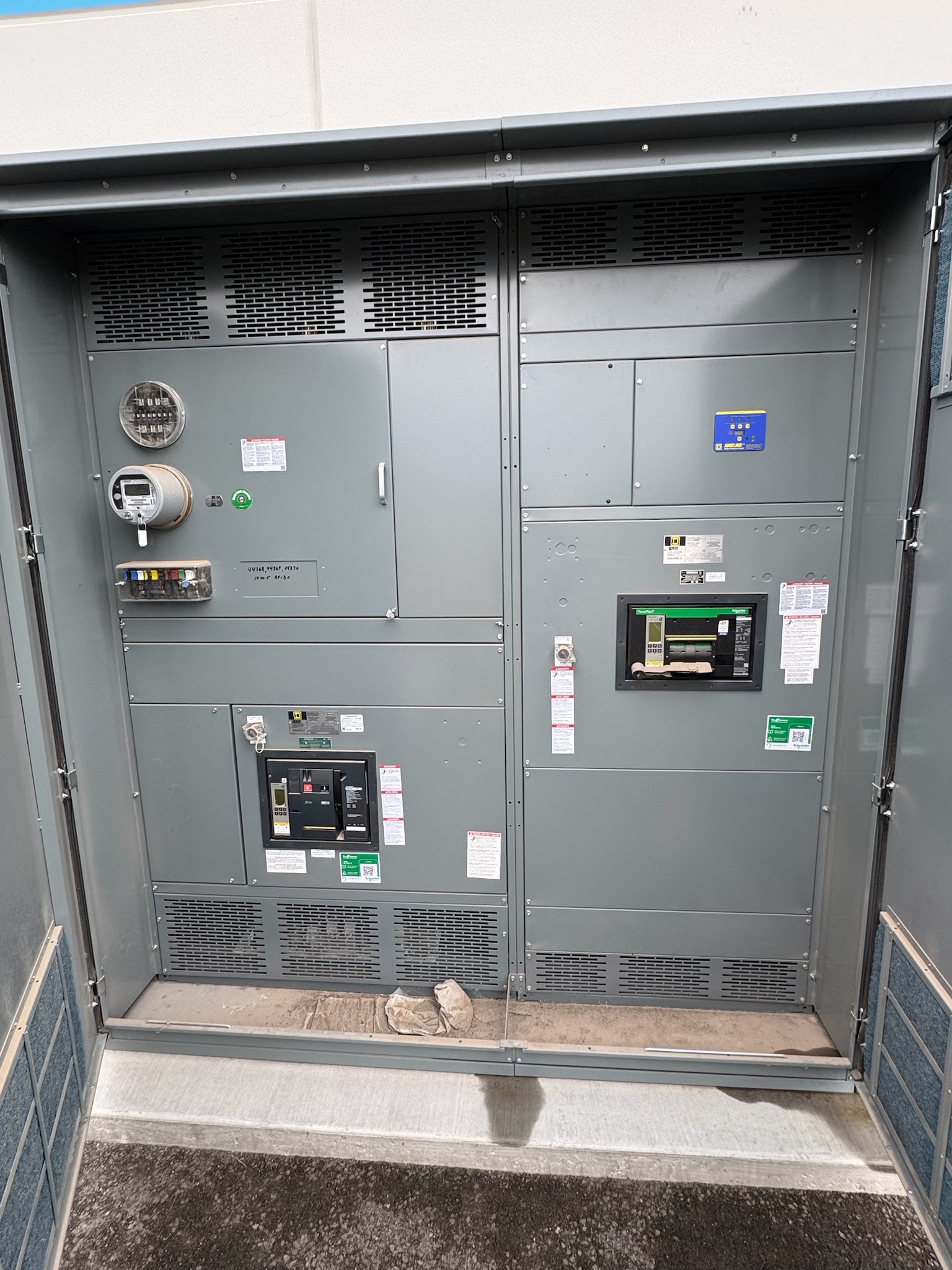
Photos are optional and should show only safely accessible equipment exteriors or exterior labels and nameplates, taken from site-authorized safe positions. Never open a cabinet or take interior photographs. Do not approach, touch, operate or test energized or potentially energized equipment, and do not disconnect, remove, lift, stage or move it. If safe access to an exterior view is not already available, rely on existing records instead. Site access, escort requirements, restricted areas and work permissions remain under the facility’s control throughout any assessment or later removal planning.
Agreeing on a practical handover
For an agreed purchase, the buyer covers necessary crane, rigging, disconnects, loading, freight and hauling as set out in the purchase arrangement; the seller does not hire or pay a removal crew. Confirm the agreed asset boundaries, access window, responsible site contacts and applicable work rules before handover. Electrical work must be performed only by qualified, authorized personnel under those rules. The buyer makes cash offers and pays upfront for agreed purchases. Each offer and acceptance is assessed individually, so neither price nor timing is guaranteed.
What a corridor assessment does not include
A request can describe a possible purchase without committing either party to it. The buyer may assess used, surplus or decommissioned equipment across all voltage classes, including assets from decommissioned data centers and shut-down power plants, but a particular asset is not automatically accepted. A corridor review concerns purchase and removal feasibility, not unrelated demolition or hazardous-material remediation. Provide known access restrictions and clearly distinguish confirmed details from unknowns. The seller is not expected to test, measure, stage, fabricate, dismantle or otherwise prepare equipment to request an assessment.