Separate verified facts from assumptions
If a switchboard or panelboard has no complete service file, start with facts you can support: where it came from, whether it was removed from service, and which documents or labels remain. Mark estimates as estimates. For example, “reported removed during a shutdown; operating history unavailable” is more useful than “good working order” based on an intact cabinet. An unbroken door, clean paint, or readable nameplate may help identify an assembly, but none proves internal condition or prior performance. Record what is unknown too, such as service duration or repair history. Clear uncertainty gives a buyer a basis to ask focused questions and assess the asset without mistaking appearance for evidence.
Build a useful record without testing
Gather existing paperwork rather than trying to fill gaps through seller testing. A prior inventory, removal record, maintenance log, or single-line drawing may clarify identity and history; note when each document was created and whether it refers to this exact equipment. If records conflict—for instance, an inventory lists one voltage while a surviving nameplate indicates another—preserve both details and flag the mismatch. Do not energize, open, touch, or approach equipment to investigate, and do not arrange photographs that require unsafe access. Any electrical work or access requiring it belongs to qualified, authorized personnel under site rules. No seller testing or preparation is required to request an individual assessment.
Identify the asset without overstating its ratings
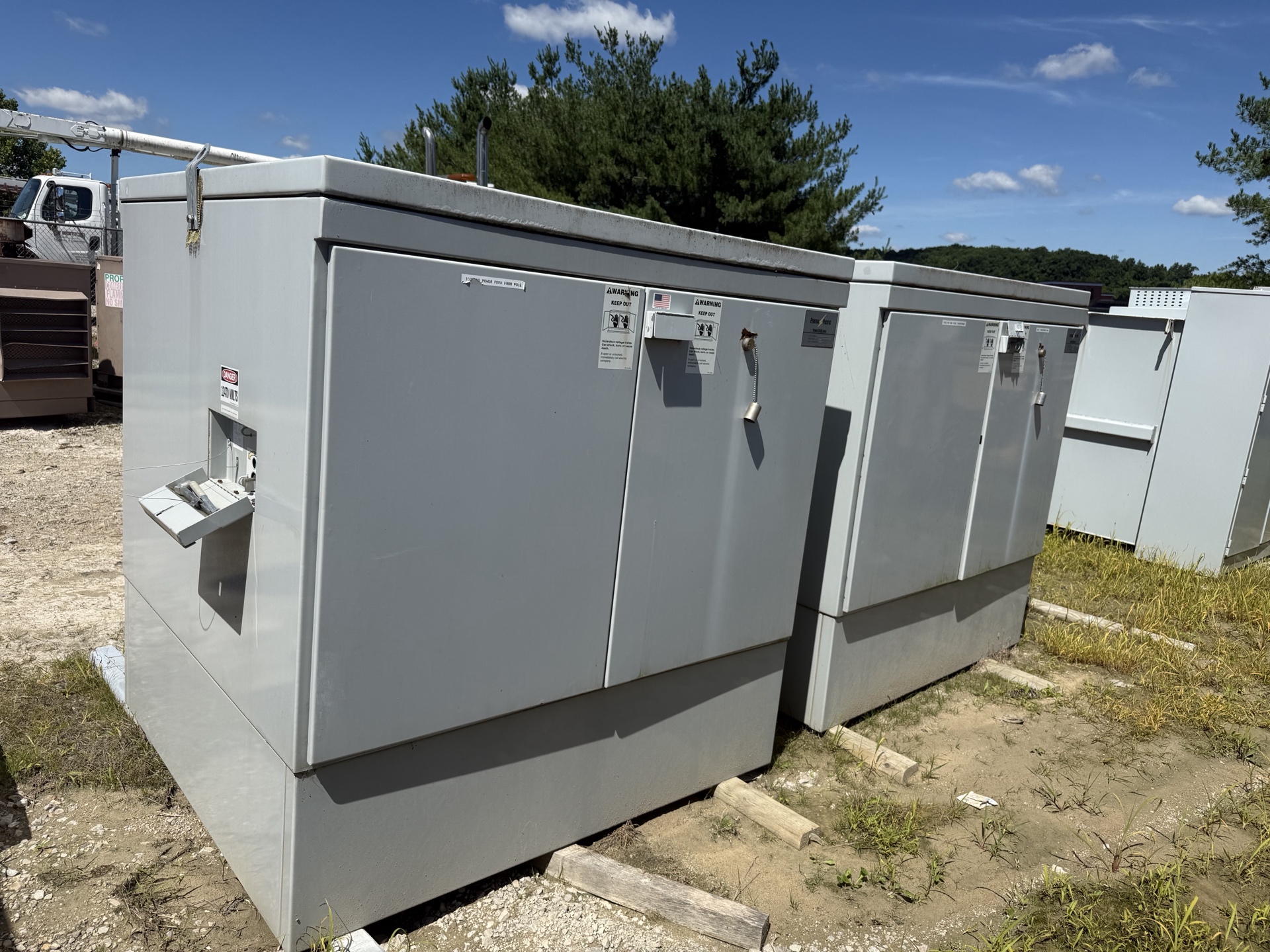
When safely accessible from an authorized position, exterior nameplate photographs can help distinguish an assembly from its installed breakers and components. Capture legible labels without moving covers or equipment. Keep the distinctions precise: an assembly’s nominal voltage and ratings are not interchangeable with a breaker’s frame, trip setting, or interrupting rating. A breaker number alone may not establish the assembly configuration or suitability for another application. If a label is obscured or absent, say so rather than supplying a guessed value. Buyers consider equipment across all voltage classes, but that does not mean every configuration is suitable or accepted; the particular asset and available evidence guide the assessment.
Choose how much uncertainty to resolve
More documentation can reduce ambiguity, but pursuing it has costs. If a site still has archived records, locating them may answer whether the equipment was stored, maintained, or removed after a known shutdown. If records are unavailable, waiting for a former operator’s recollection may add context without establishing test results. Compare the effort and delay of further research with a straightforward disclosure of what is known now. Do not imply that a recollection confirms operating condition. A buyer can assess an item with incomplete records, but missing information may affect its individual evaluation. The practical goal is an accurate account, not a polished history that the available evidence cannot support.
Plan removal around authority and site constraints
Before discussing pickup, confirm that you own the equipment or have authority to sell it, and identify who controls access and site procedures. If the equipment remains installed, removal is not a seller-side inspection step: disconnects and other electrical work must be performed by qualified, authorized personnel under site rules. Share known constraints such as access limits, loading conditions, or whether lifting equipment may be needed; do not promise that a route or lift is feasible without a proper review. For an accepted transaction, the buyer covers crane, rigging, disconnects, loading, freight, and hauling as applicable. The equipment’s condition and the site’s practical requirements still require individual assessment.
Compare an offer with the cost of holding the asset
Once you have disclosed uncertain history, compare any cash offer and upfront payment terms with the alternative of retaining the equipment while searching for records or another disposition. Upfront payment is part of the buying approach, but no particular offer, acceptance, or timetable is assured; assets are assessed individually. Ask what equipment the assessment covers, which identity details remain uncertain, and what pickup assumptions need confirmation before deciding. If the assembly’s history cannot be verified, avoid representing it as tested or service-ready. A transparent sale may be more practical than paying for investigations that cannot resolve the gap, while waiting may make sense if a specific missing record could materially clarify ownership, identity, or configuration.