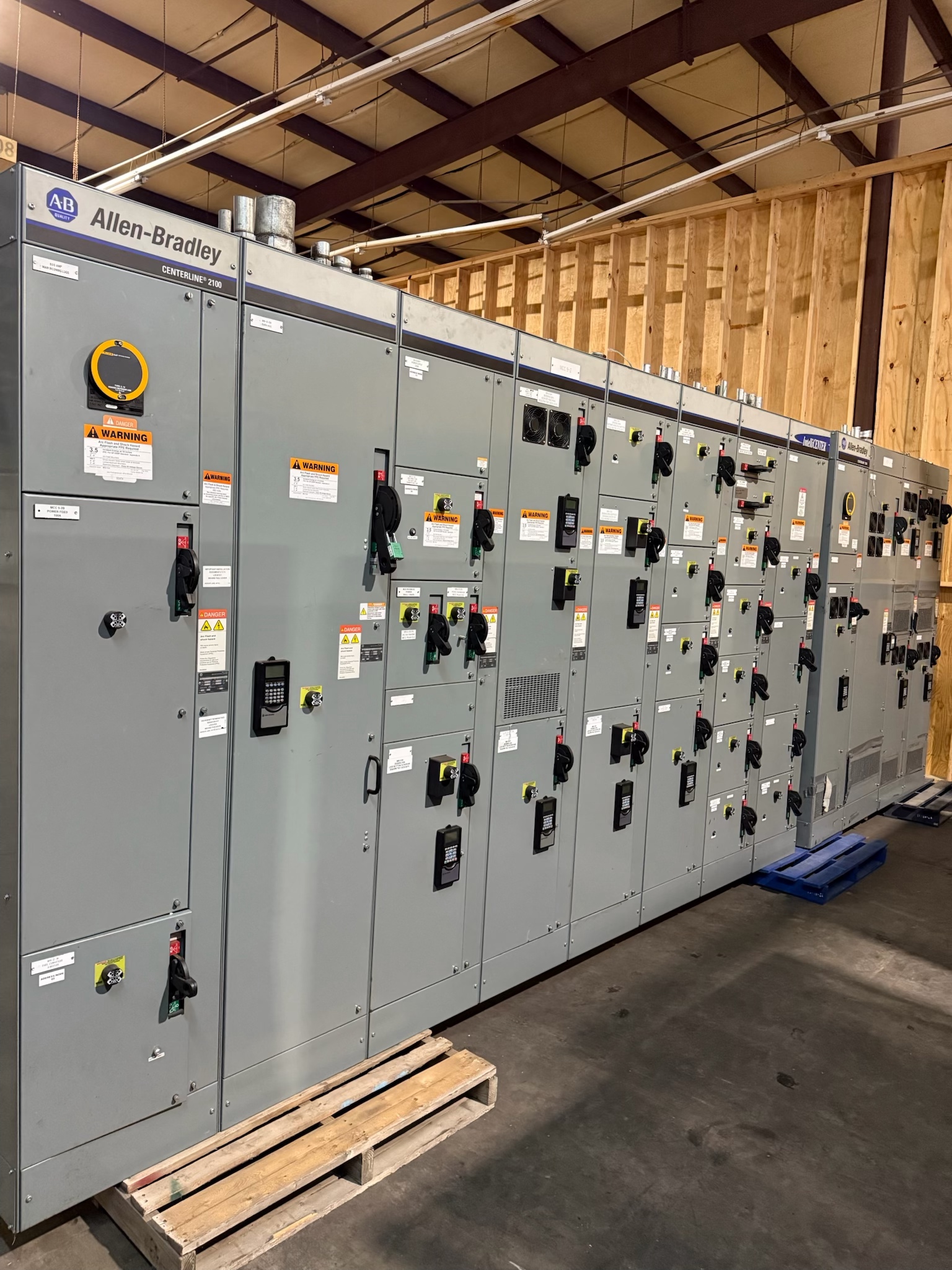
Start with the exact visible marking
Record the nameplate wording precisely, preserving punctuation, units, line breaks where practical, and any distinctions between kV and V. Do not convert a partial marking into “34,500 V” unless that exact value appears or the source document explicitly establishes the conversion. Note whether the marking is on a cabinet, breaker, transformer, or another component, but do not identify uncertain equipment by appearance alone. A safely accessible exterior nameplate can be photographed from an authorized safe position. Never approach, open, touch, or reposition equipment to improve a photograph; follow site access rules.
Separate system nominal voltage from device ratings
A facility’s stated system nominal voltage describes the electrical system, while a breaker or other device may carry its own voltage and interruption ratings. These are related records, not interchangeable labels. For example, a document may identify a 34.5 kV system while a separate device plate lists a different maximum rating; that difference should be reported, not “corrected” by the seller. Capture each value with its label and source. If a marking is obscured, incomplete, or ambiguous, say so. Do not infer voltage class, suitability, or capability from a nearby label.
Describe the assembly without assuming its configuration
Document what is visibly identifiable and what records call it: a lineup, switchgear section, breaker, or component. Keep assembly identity separate from breaker identity. If papers mention a frame rating, trip rating, or sensor rating, transcribe each under its own description rather than treating the numbers as equivalent. A breaker’s rating does not establish the rating of the complete assembly, and the assembly label does not verify every installed device. Avoid conclusions about phases, insulation, interrupting duty, bus arrangement, or compatibility unless reliable documentation states them. An individual review may need more records.
Establish ownership and authority to sell
Before arranging a review, identify the legal owner or the party authorized to sell the equipment. Useful non-sensitive records may include an asset list, decommissioning inventory, purchase or transfer documentation, and the person empowered to approve disposition. A site operator’s control of access does not by itself establish ownership. If the equipment came from a decommissioned data center or a shut-down power plant, note that context only when known and supportable; it does not determine condition, provenance, or value. Flag liens, shared ownership, or disposal approvals that remain unresolved rather than implying authority.
Flag access and handling limits early
Tell the buyer about known restrictions before anyone plans a site visit: controlled areas, escort requirements, overhead or floor-load limits if documented, narrow routes, restricted work hours, or rules for contractors. Do not estimate lifting points, weight, center of gravity, or required crane capacity from photographs. If records provide dimensions or weight, identify their source and whether they apply to the complete assembly or a component. All electrical work, including disconnects, must be performed by qualified, authorized personnel under site rules. Do not move or handle equipment to gather information.
Make a safe, useful information package
Share legible photographs only of exterior nameplates and equipment that are safely visible from an authorized position; never enter a restricted area or approach energized gear for images. Pair images with transcribed markings, document dates, known operating or decommissioning status, and clear statements about unknowns. Remove sensitive facility details where appropriate, while retaining enough context to identify the asset. No seller testing or special preparation is required. Buying decisions are assessed individually, so an incomplete record can be labeled incomplete rather than filled in with an assumed model, rating, condition, or configuration.
Understand what an assessment and offer can cover
The buyer purchases used, surplus, and decommissioned electrical equipment across voltage classes and may make a cash offer with upfront payment if the asset is accepted. Price and acceptance are determined individually; the 34,500 V designation alone promises neither. For an agreed transaction, the buyer covers freight, crane, rigging, disconnects, loading, and hauling, with electrical work handled by qualified authorized personnel under site requirements. Discuss access restrictions, responsibilities, and payment terms before committing. No universal compatibility or outcome should be assumed: exact markings and verified ownership support review, but do not decide the final terms by themselves.