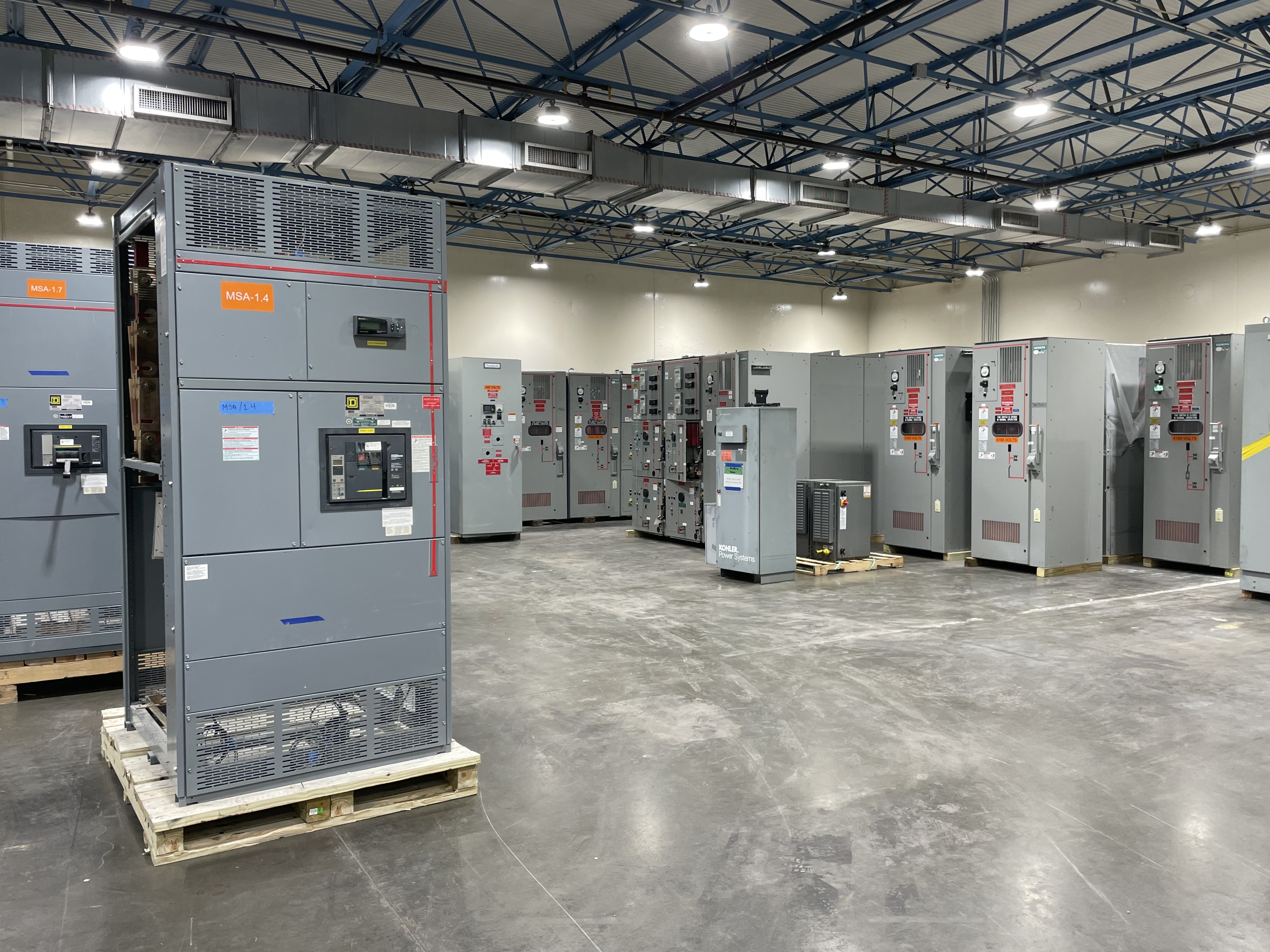
Read the ratings as separate facts
A 480 V reference may describe a nominal system, equipment nameplate voltage, or another documented value; do not treat these as interchangeable. Likewise, a 3,000 A marking needs context: assembly continuous-current information is not the same as a breaker’s frame rating or trip setting. Interrupting ratings are a separate device characteristic. A buyer should report each value only when supported by existing records or clearly legible exterior markings, and identify what the value refers to. The combination alone does not establish equipment class, condition, compatibility, or suitability for another installation. If records conflict or leave the rating basis unclear, preserve that uncertainty rather than filling gaps by inference.
Records that help an assessment
Useful material can include existing one-line diagrams, equipment schedules, asset registers, submittals, nameplate transcriptions, and decommissioning inventories. Share only records you are authorized to provide, and note whether a value comes from a system document, assembly label, or individual device record. Do not commission measurements or testing for a buyer inquiry. If a label cannot be read from a safe position, state that it is unavailable; nobody should open a cabinet to improve the record. Exterior photographs are optional and should show only safely accessible equipment exteriors and exterior labels, taken from positions permitted by site rules. Never photograph interiors or an open enclosure.
What a large assembly leaves unknown
Amperage and voltage markings do not establish shipping weight, dimensions, center of gravity, lifting points, remaining connections, or the condition of the route out of a building. Large assemblies can also be part of a wider lineup, so the boundary of the proposed asset should be clear from existing records where possible. Do not ask site staff to estimate weight by handling, dismantling, or moving equipment. The buyer may need to review available drawings, access details, and site restrictions before deciding whether an offer is practical. Removal planning is conditional: a purchase assessment is not an engineering approval, lift plan, or commitment to accept every item.
How a buyer reaches an offer
This independent buyer considers used, surplus, and decommissioned electrical equipment across all voltage classes, including equipment from decommissioned data centers and shut-down power plants. For the assets and scope it agrees to purchase, the buyer makes a cash offer and pays upfront as agreed. Each proposed purchase is assessed individually against the records, equipment scope, condition information already available, and removal constraints; neither a price nor a completion date is guaranteed. The buyer may decline an asset or revise the scope if material details change. No seller testing is required to request an assessment, and a quoted marking does not by itself establish value or acceptance.
Removal roles, route review, and boundaries
For an agreed purchase, the buyer covers necessary crane, rigging, disconnects, loading, freight, and hauling within the agreed scope. The seller is not expected to hire a crew or pay a removal contractor for that work. Because assembly weights or access limits may be unknown, a safe removal route must be reviewed by qualified personnel and, where required, an engineer before work proceeds. Electrical tasks are restricted to qualified, authorized personnel working under the site’s rules and approvals. No one should approach, touch, open, operate, test, disconnect, remove, or move equipment that is energized or may still be energized. The purchase scope does not include unrelated demolition or hazardous-material remediation.
Handover details to settle in writing
Before arranging collection, identify the specific assets covered, the records and rating descriptions relied on, access permissions, work boundaries, and who coordinates site approvals. Confirm the agreed payment and timing directly in the purchase terms; assessment alone is not acceptance or a scheduling guarantee. Raise uncertain weights, route restrictions, outage status, and any limits on crane access early, without asking the seller to stage, disconnect, or move equipment. If the site cannot authorize safe access or the required removal method, pause coordination until the responsible parties resolve it. A clear handover protects both sides while leaving electrical work and lift execution to properly authorized professionals.