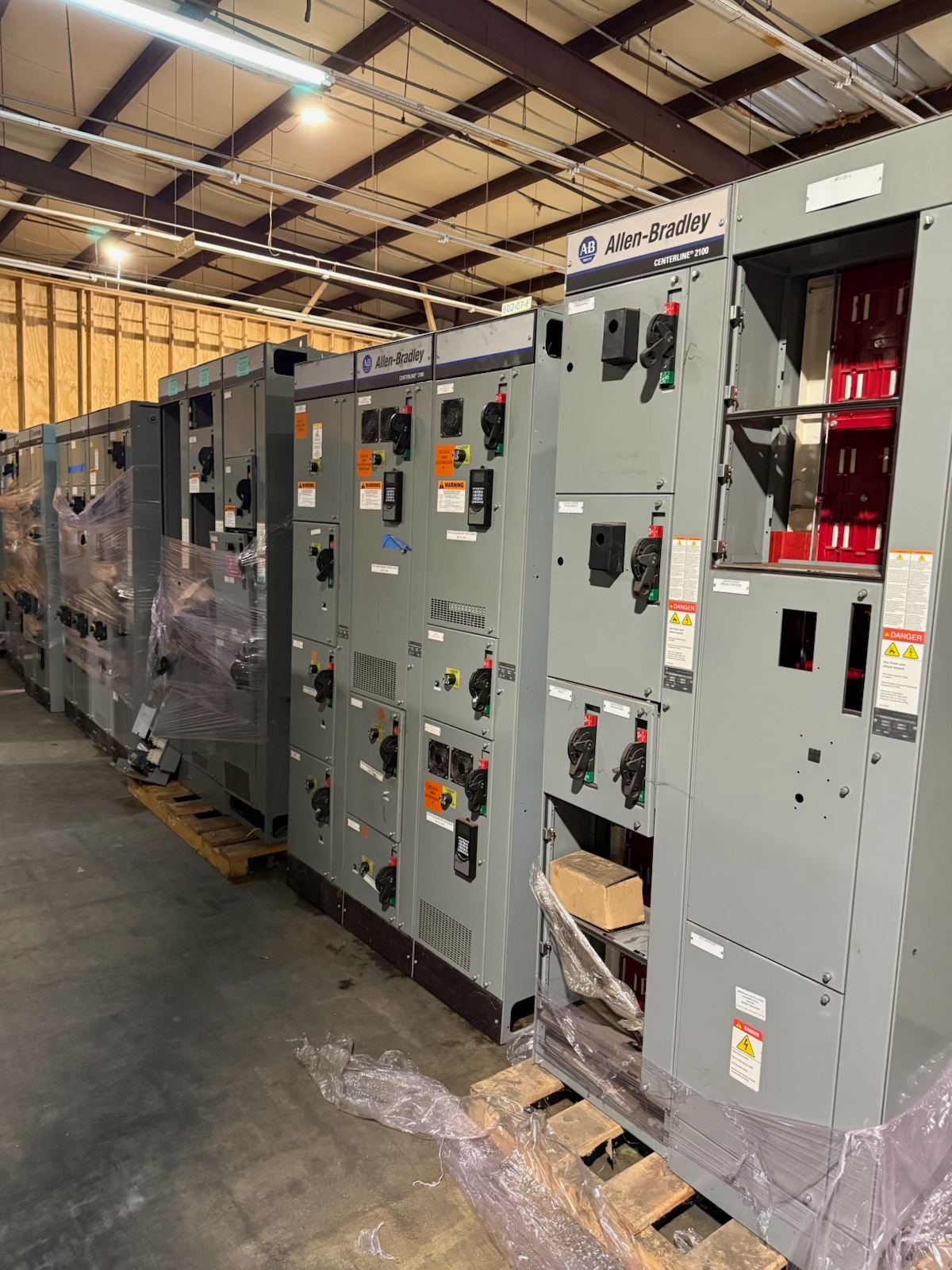
Describe the lot without assuming its contents
For an initial review, identify the switchgear assembly and list separately stored cradles as separate items. Existing inventory descriptions may call a section drawout-style, but that alone does not confirm that a removable breaker is present, included, or associated with a particular cradle. Note whether the records describe the assembly, individual devices, or loose components. If a breaker is mentioned, report that as a record-based description rather than a verified physical count. Do not open a cabinet or investigate installed equipment to resolve uncertainty; unknown contents can remain unknown during the initial assessment.
Use records to distinguish ratings
Useful existing documents can include asset schedules, purchase or maintenance records, drawings, and exterior nameplate information already documented by authorized personnel. Keep nominal system voltage distinct from assembly or equipment voltage. Likewise, continuous current, device frame, trip rating, and interrupting rating are separate values, not interchangeable descriptions of a switchgear lot. Report a value only when supported by an existing record, preserving its label and source. If records are missing or unclear, say so rather than infer a rating from appearance, a nearby section, or a cradle. No seller testing or new measurements are required.
Make a safe visual record
Photos are optional and should be limited to safely accessible equipment exteriors and exterior labels or nameplates, taken only from site-authorized safe positions. Never open a cabinet or take internal photos. Do not approach, touch, operate, test, disconnect, remove, or move equipment that is energized or potentially energized. Leave installed units untouched, including units believed to be drawout equipment; do not rack out a device or try to establish whether one is present. Any electrical work, isolation, or other site work must be performed only by qualified, authorized personnel under the site's rules.
Explain what is included—and what is not known
A clear proposed-lot list can separate the assembly, detached cradles, documented accessories, and items whose presence is uncertain. Note whether the offer request covers all listed items or only identified assets, and flag exclusions such as equipment retained by the site or components not included in the sale. Do not describe a cradle as a breaker or assume it fits a particular section. A buyer assessment considers the information provided and the proposed scope; it does not guarantee acceptance of every item, establish condition, or resolve undocumented contents.
Compare the practical tradeoffs
Keeping the assembly and its separately stored cradles in one proposed lot may simplify inventory and handover, but separate listing can make ownership and included scope clearer when components are stored apart. Neither approach proves a cradle is complete or matched to a section. The right description depends on records and what the seller is authorized to include, not an assumption that all parts belong together. Share known storage and access constraints without staging, sorting, measuring, or moving equipment for the buyer. The buyer assesses each opportunity individually; price and timing are not guaranteed.
Agree on payment and removal responsibilities
For an agreed purchase, the buyer makes a cash offer and pays upfront under the agreed transaction terms. The buyer also covers necessary crane, rigging, disconnects, loading, freight, and hauling for that agreed purchase; the seller does not hire or pay a removal crew. These arrangements apply to the agreed sale, not to unrelated demolition, site restoration, or hazardous-material remediation. Confirm the written scope and handover plan before any work. No one should treat an assessment or offer as authorization to perform electrical work; site rules and qualified, authorized personnel govern such work.
Request a review without preparing equipment
To request an assessment, provide the location, a concise item list, existing records, known exclusions, and any site access requirements. Add only permitted exterior photos when safely available; do not arrange testing, fabricate information, open enclosures, or prepare equipment for removal. We consider used and surplus equipment across all voltage classes, including suitable opportunities arising during data-center decommissioning or power-plant shutdowns, without implying acceptance of a particular lot. The proposed scope, available evidence, and logistics are reviewed individually. If terms are agreed, coordinate a safe handover with the site's authorized personnel.