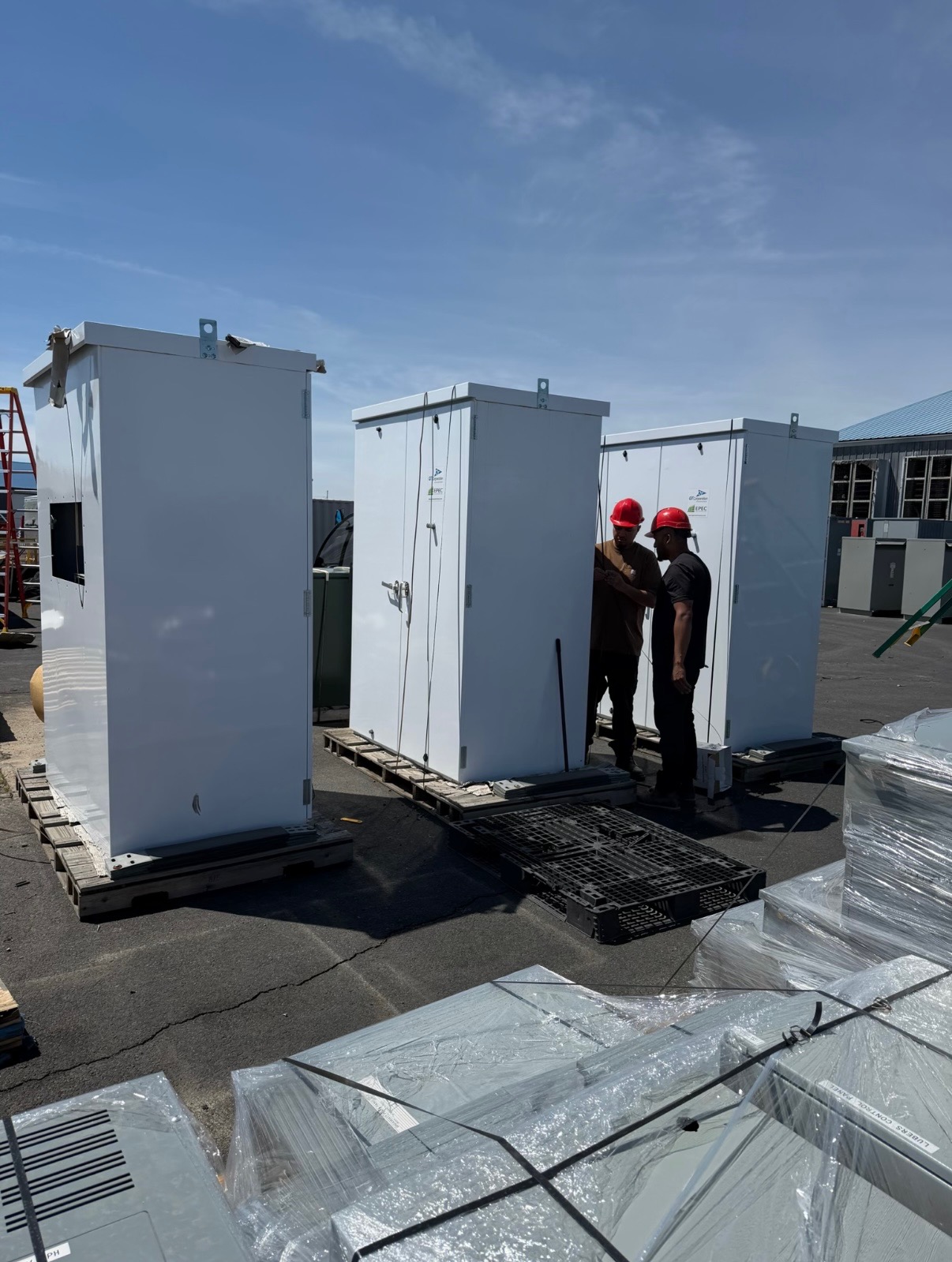
Separate what is installed from what is crated
Describe the switchboard as it is documented and currently stored, without moving anything to improve its appearance. Existing packing lists, photographs from prior handling, shipping documents or inventory notes may distinguish sections intended to join at shipping splits from covers and trim packed separately. Note whether a crate is recorded as belonging to this board, whether its contents are identified, and whether any listed crate cannot be located. Avoid calling the assembly complete merely because the visible lineup appears intact. An independent buyer can assess the described package, but inclusion, condition and purchase acceptance remain subject to individual review; a loose cover is not automatically evidence of a missing electrical component.
Use crate dimensions already on record
Documented exterior crate length, width and height can help frame a preliminary handling discussion, particularly where several shipping splits and accessory crates are involved. Share dimensions from existing freight paperwork or inventory records, and identify which crate each measurement describes. If dimensions are unavailable, say so; do not measure, reposition, open or fabricate anything for an inquiry. A crate’s outside dimensions do not establish its weight, contents, lifting points or safe handling method. Those matters remain unknown unless supported by records and reviewed for the site. This distinction helps avoid treating a shipping estimate as a confirmed removal plan or assuming that separately packed covers fit a particular board.
Keep electrical ratings tied to their labels
Provide existing nameplate or project documentation when available, keeping nominal system voltage, switchboard assembly voltage and continuous current distinct. A device frame rating, trip rating and interrupting rating are separate values and should not be substituted for one another or treated as proof of compatibility. If records do not show a value clearly, mark it unknown rather than infer it from a nearby label, an adjacent section or a crate description. No seller testing is required. Photos may show only safely accessible equipment exteriors and exterior labels or nameplates, taken from site-authorized safe positions. Never open a cabinet or take internal photographs; do not approach equipment that may be energized to obtain a better view.
Share provenance and condition records, not assumptions
Useful existing information may include an asset list, drawings, bills of material, shipping split schedule, crate inventory, storage history and records of known exclusions. Identify whether covers are listed as separate accessories and whether documentation describes them as included, without asserting that they are present if the records are unclear. Note visible, safely observable exterior damage only when it can be reported from an authorized safe position. Unknown storage conditions, missing records or uncertain crate contents can be stated plainly; they do not call for seller inspection or testing. The buyer also purchases used, surplus and decommissioned equipment across all voltage classes, including equipment from decommissioned data centers and shut-down power plants.
Plan a handover within site rules
Never approach, touch, open, operate, test, disconnect, remove or move switchboard equipment that is energized or potentially energized. Any electrical work must be performed only by qualified, authorized personnel under the site’s rules. If a purchase is agreed, the buyer covers necessary crane, rigging, disconnects, loading, freight and hauling as agreed; the seller does not hire or pay a removal crew. The parties must coordinate access, authorization and safe handover conditions before work begins. This arrangement is not a promise to perform unrelated demolition, clear other property or remediate hazardous materials. Share site restrictions and access procedures already available, without undertaking physical preparation for the inquiry.
Request an individual purchase assessment
For a review, provide the switchboard’s general description, known location, available records, count of shipping splits and separately crated covers, and documented dimensions for each crate when available. Include safely obtained exterior and nameplate photos only if authorized and accessible without approaching potentially energized equipment. The independent buyer makes cash offers and pays upfront for agreed purchases; an inquiry does not guarantee an offer, acceptance, price or schedule. Each proposed purchase is assessed individually, including completeness, documentation, access and handling considerations. No testing, staging, disassembly or seller-paid removal is required to request an assessment. If an item or record is uncertain, identify that uncertainty instead of presenting an assumption as verified fact.